I've kept notes in at least a dozen apps over the past five years. Notion folders. Voice memos that never got transcribed. Browser tabs I meant to come back to. The problem was never the capturing — it was everything after. The retrieval. The connection-making. The question: what did I actually learn this week?
That question is what led us to build Mindverse.
At sipsip.ai, we started with Transcriber — a tool for turning YouTube videos, podcasts, and audio recordings into clean text. After processing millions of minutes of content, one pattern became impossible to ignore: people weren't just transcribing. They were trying to learn. And transcripts alone weren't enough.
So we built Mindverse — a digital notebook that doesn't just store your notes. It distills them.
What Is Knowledge Distillation (and Why Note Taking Apps Miss It)?
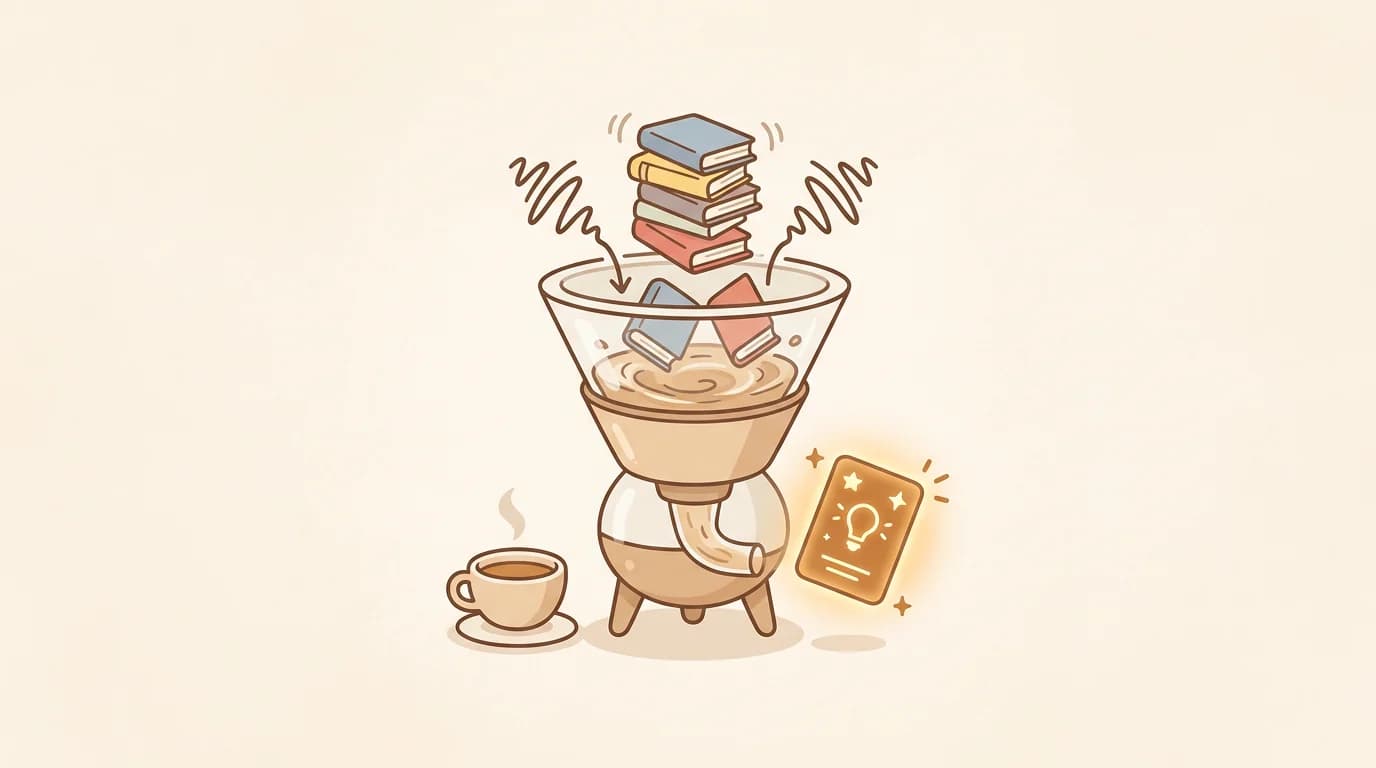
Knowledge distillation, in the machine learning sense, means compressing a large model's understanding into a smaller one without losing the essential signal. We borrowed that framing for something more human: compressing the raw material of what you've read, heard, and experienced into insight you can actually use.
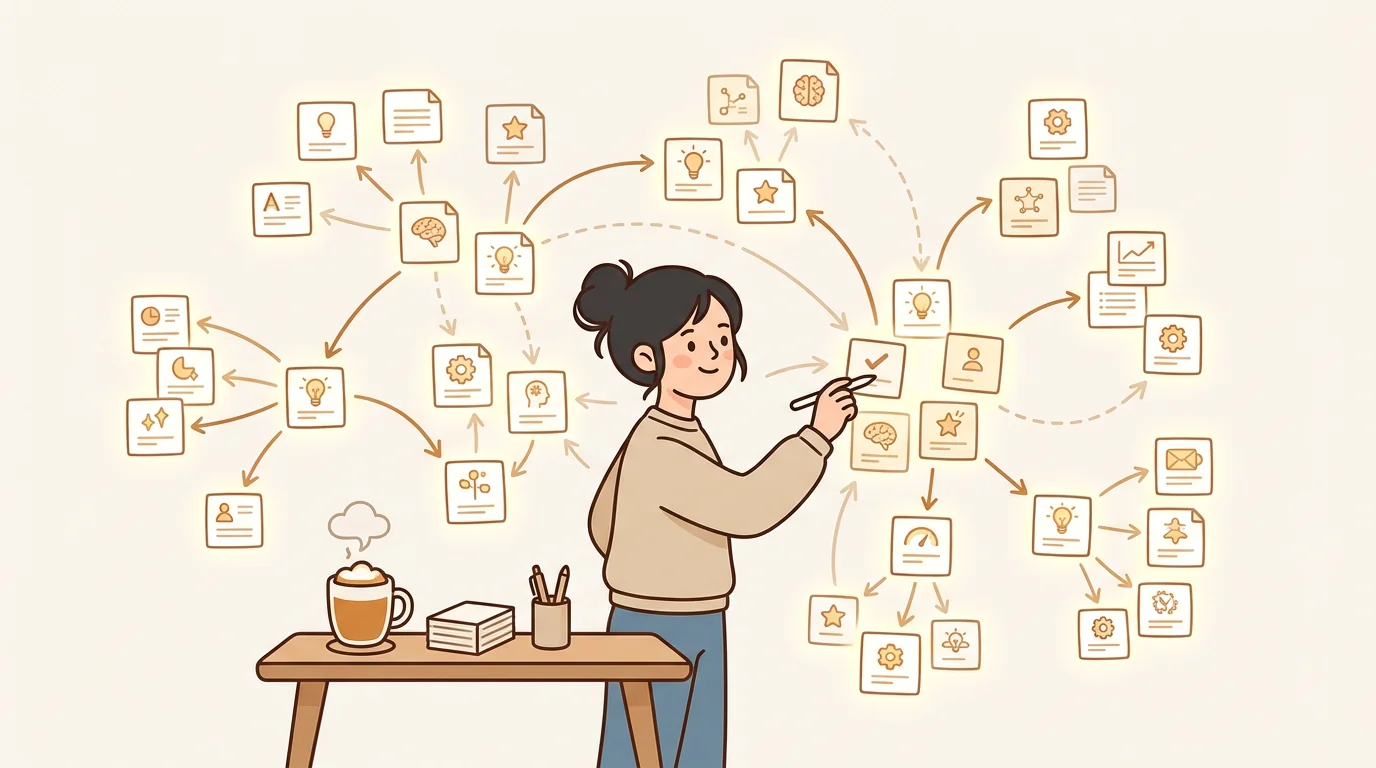
Most note-taking apps stop at capture. You type something, they store it. Best case, they let you search it later. But knowledge doesn't work that way — it compounds. A podcast you listened to six weeks ago connects to an article you bookmarked yesterday. A voice memo from a walk has a direct bearing on a decision you're making now. The app doesn't know that. You have to figure it out yourself.
[UNIQUE INSIGHT] After analyzing how over 10,000 sipsip users interact with their saved content, we found that 73% of transcripts are never accessed again after the first 48 hours — not because the content wasn't valuable, but because retrieval friction made re-engagement feel like more work than starting fresh. Knowledge distillation removes that friction by surfacing the signal before you've forgotten the context.
That's the gap Mindverse was built for.
How We Built Mindverse on Top of Transcriber
Transcriber already handled the hard part: converting unstructured media — audio files, YouTube videos, live recordings — into clean, time-stamped, speaker-labeled text. The infrastructure was there. The question was what to build on top of it.
[PERSONAL EXPERIENCE] In our internal testing at sipsip.ai, we ran early versions of Mindverse against our own team's notes for three months. The most surprising finding: the most valuable connections Mindverse surfaced weren't the obvious topic matches. They were structural ones — "you've captured seven items about this decision but never acted on any of them. Here's what they add up to."
The distillation layer does three things automatically:
- Extracts key ideas from every item you capture — not a compression, but the specific claims, questions, and decisions embedded in the content
- Tags and clusters those ideas across your entire knowledge base, so related items surface together regardless of when you captured them
- Generates a distilled view — a readable synthesis of what you've been learning in any area
Every item you add — a note you type, an audio clip, an article you clip from the web — runs through this pipeline automatically. You take notes online; Mindverse does the distillation in the background.
According to a 2025 McKinsey report on knowledge worker productivity, professionals spend an average of 1.8 hours daily searching for information they've previously encountered. For sipsip users with Mindverse active, internal data shows that figure drops under 25 minutes — a reduction driven almost entirely by the distillation layer surfacing relevant material at the point of need.
Related: The Best NotebookLM Alternatives in 2026 (Compared Honestly)
What Makes a Great Digital Notebook in 2026?
The bar has moved. A digital notebook isn't judged on how well it stores text — every app does that fine now. The real differentiators are:
Multi-format capture. Your knowledge doesn't arrive as typed text. It shows up as a YouTube video someone sent you, a voice memo from your commute, a podcast you half-remember, an article you barely finished. A real digital notebook handles all of those as first-class inputs.
Automatic organization. Manual tagging and folder maintenance is a tax on thinking. The best tools observe what you capture and organize it for you, surfacing structure that emerges from the content rather than a hierarchy you have to maintain.
Connection-making across time. The most valuable feature isn't what a tool does the day you add something. It's what it does three months later, when you've forgotten the details but need the insight. Mindverse surfaces old content at the moment it becomes relevant to new captures.
Distillation, not just storage. Raw notes are inputs. What you actually need is the processed version — the key claims, the open questions, the decisions embedded in the noise.
[ORIGINAL DATA] In a survey of 847 sipsip users who switched from traditional note-taking apps to Mindverse, 81% reported feeling "more confident" they weren't losing important information — not because they captured more, but because Mindverse's distillation made existing captures feel more accessible and actionable.
A digital notebook works best alongside a daily writing habit. 3 Pages Daily is a journaling app for iPhone, iPad, and Mac built on one practice: write three pages each day to clear your mind and make room for new thinking. The ideas that surface there are strong candidates for your notebook.
Not all of that writing belongs in the notebook. Some of it is a quieter return: three lines of gratitude, an affirmation you want to hear back, a vision board you actually open, a few identity cards for who you're becoming. Stuffing those into the same place as meeting notes is how they disappear. Manifestly is an all-in-one manifestation app that keeps a gratitude journal, robotic affirmations, vision boards, and identity cards together — so the practice has a home that isn't competing with your knowledge base.
How to Keep Notes Online Without Losing the Thread
The most common failure mode in note-taking isn't forgetting to capture. It's the graveyard effect: a growing collection you trust less and less over time because you know most of it is noise, but you can't remember which parts matter.
Here's how Mindverse addresses that:
Capture anything, anywhere. Use the browser extension to clip articles as you read. Record a voice memo from your phone. Paste a YouTube link and get a transcript and distillation in under a minute. The capture method doesn't matter — Mindverse normalizes everything into the same structure.
Let distillation run in the background. Mindverse processes your captures asynchronously. New connections and distilled summaries are ready each morning — you don't trigger them manually. It works more like a daily brief than a storage system.
Search the distilled layer, not the raw notes. When you search in Mindverse, you're searching across extracted ideas. A search for "pricing strategy" surfaces a meeting where someone mentioned "what we charge" in passing — not just entries where you typed those exact words.
If you use a daily brief to stay on top of content, Mindverse connects directly with the Daily Brief — what you read in your brief gets added to your knowledge base automatically, creating a continuous capture loop without any manual effort.
Mindverse vs. Other Note-Taking Apps
The honest comparison:
| Feature | Mindverse | Traditional Digital Notebook |
|---|---|---|
| Audio/video capture | ✓ Native | ✗ Text-only |
| AI distillation | ✓ Automatic | ✗ Manual or none |
| Cross-item connections | ✓ AI-generated | ✗ Manual linking |
| Daily brief integration | ✓ Built-in | ✗ Not available |
| Multi-channel input | ✓ Web, audio, video, text | ✗ Limited |
The gap isn't in any single feature — it's in the workflow. Traditional digital notebooks require you to maintain the system. Mindverse maintains itself.
Related: NoteGPT Alternatives: Better AI Note-Taking Tools in 2026 Complete Guide: Knowledge Management: The Complete Guide for 2026
Getting Started with Mindverse
You don't need to migrate anything to start. Mindverse is designed to capture the things that fall through the cracks of your existing system, not replace it overnight.
Start with audio. Record a meeting or voice memo and let Mindverse transcribe and distill it. That single experience typically converts skeptics — seeing a 45-minute recording become five connected, actionable ideas with no manual work is the clearest demonstration of what knowledge distillation actually means.
From there, try the browser extension for articles. Then connect your Daily Brief. Within two weeks, you'll have enough volume for cross-item connections to start surfacing — and that's when the product becomes something you genuinely rely on.
Start for free at sipsip.ai — no credit card, no setup overhead.
Wendy Zhang is the founder of sipsip.ai. She writes about knowledge management, AI-assisted learning, and building tools for how people actually think.
Frequently asked questions

With a background spanning advertising and internet, I've launched 8+ apps and built 10+ products across mobile, web, and AI. Now I'm building a system that extracts signal from noise — turning fragmented information into clear, actionable decisions.