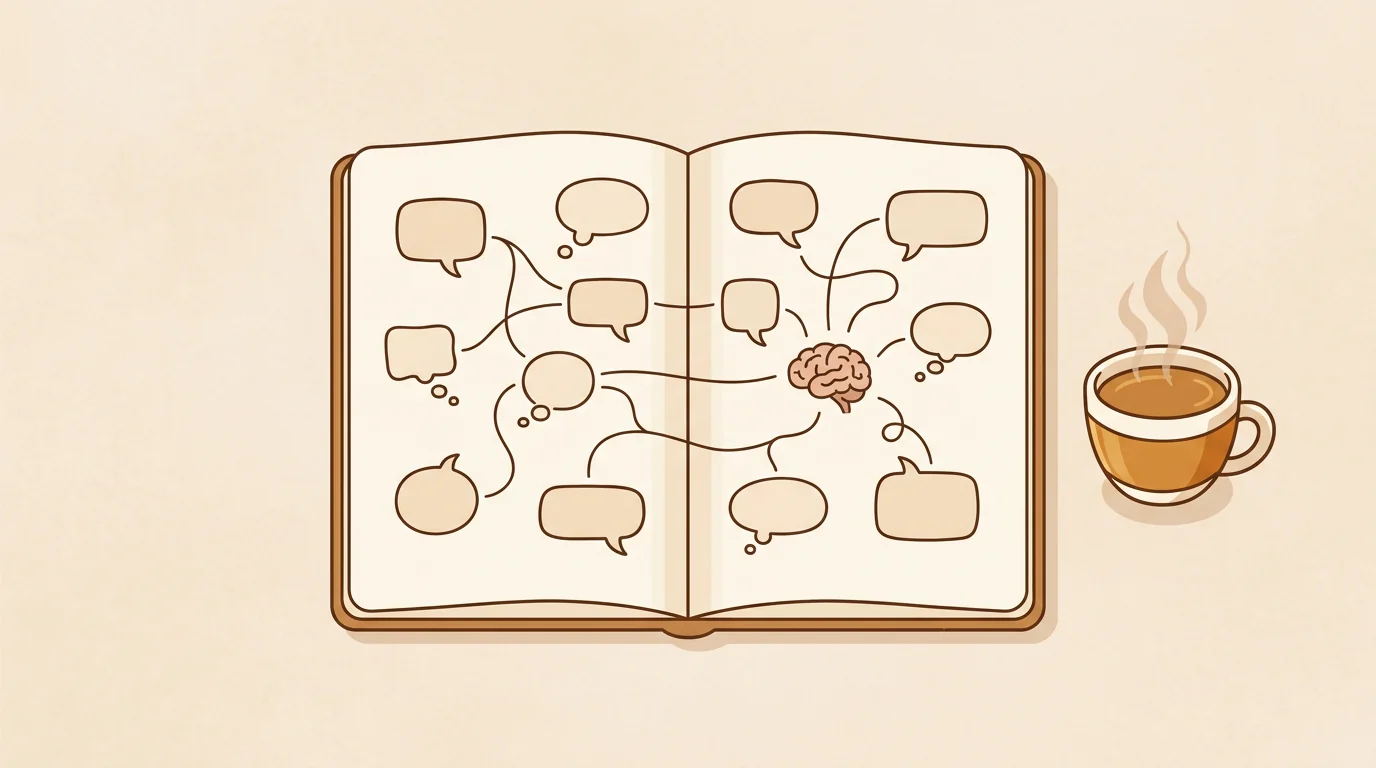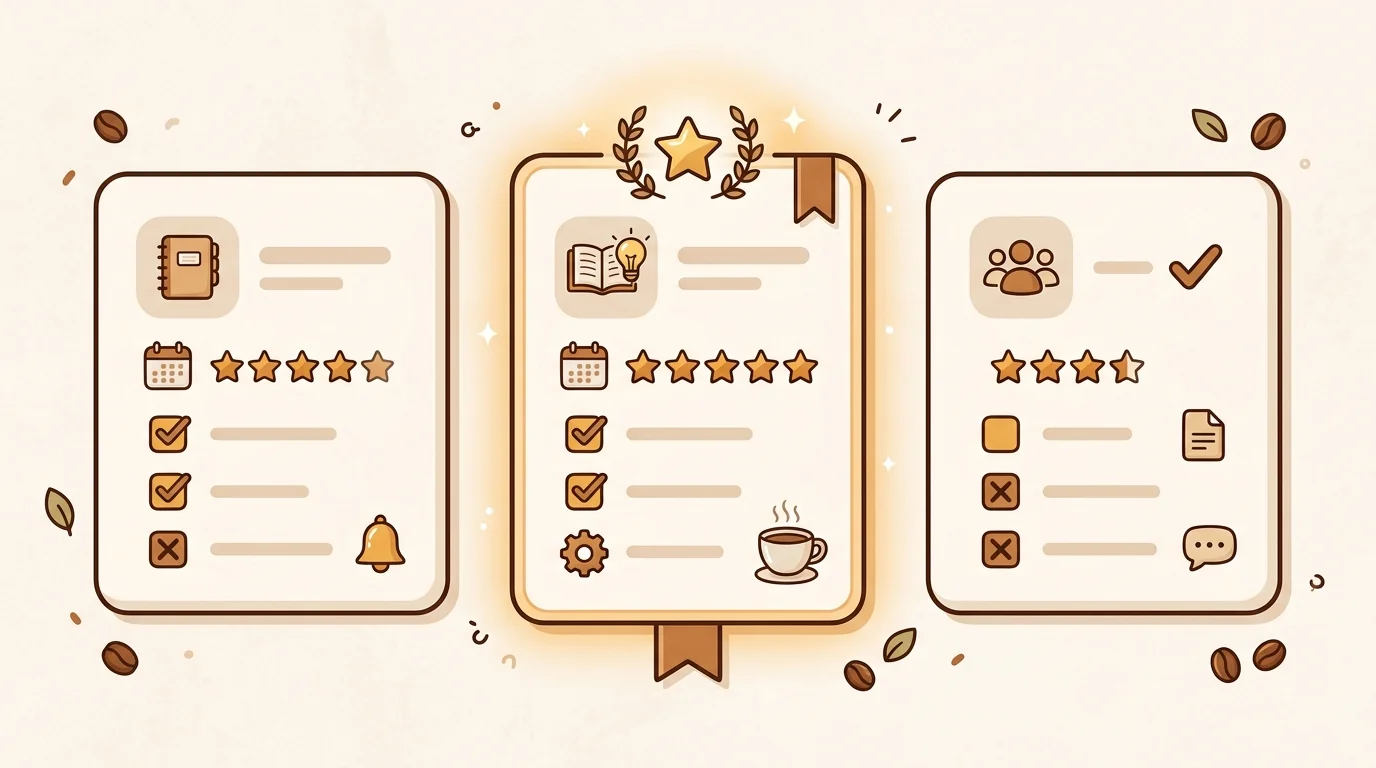
I used to read everything twice. First to understand it, then again later when I couldn't remember what I'd learned. That loop cost hours every week — and I never felt like I was actually building knowledge, just cycling through the same material. That's what led me to think seriously about knowledge distillation, and eventually to build Mindverse.
Knowledge distillation sounds like a technical term — and in machine learning, it is. But the idea behind it applies just as well to how humans learn. Here's what it actually means, how AI uses it, and why it matters for anyone trying to get smarter from the information they consume.
What Is Knowledge Distillation?
Knowledge distillation is the process of compressing a large body of knowledge into a smaller, higher-signal form — without losing what matters.
In neural networks, it specifically means training a small "student" model to replicate the behavior of a large "teacher" model. The student doesn't just copy outputs; it learns the teacher's internal reasoning patterns, producing a model that's faster and cheaper while retaining most of the capability.
Geoffrey Hinton and colleagues introduced the concept formally in their 2015 paper "Distilling the Knowledge in a Neural Network", and it's now a foundational technique in AI development — used to compress GPT-scale models into versions that run on mobile devices.
[UNIQUE INSIGHT] The key insight from the original paper wasn't compression for its own sake. It was that the soft probability outputs of a large model carry more information than the hard labels — a model that's 90% confident on one class and 9% on another is telling you something that a binary label hides. Knowledge distillation captures that richer signal. The same principle applies to human learning: the nuance in how an expert thinks about a topic is more valuable than the surface-level conclusion they reach.
How Knowledge Distillation Works in AI
The mechanics are straightforward. You have a large, accurate teacher model and a smaller, faster student model. Rather than training the student on raw data alone, you train it to match the teacher's output distribution — specifically the "soft targets" (probability scores across all classes, not just the winning class).
This works because:
- Soft targets carry dark knowledge — the teacher's uncertainty across classes encodes relationships between concepts that raw labels don't capture
- Temperature scaling smooths the probability distribution, making subtle patterns more visible to the student
- The student generalizes better on data it hasn't seen, because it's learning reasoning patterns rather than just memorizing correct answers
The result is a model 10-100x smaller that performs at 90-95% of the teacher's quality. This is how companies run LLMs on edge devices, in browsers, and at low latency — distillation is the efficiency engine behind most deployed AI.
According to Hugging Face's 2025 State of AI Report, knowledge distillation is the most widely used compression technique in production LLM deployments, applied to over 60% of publicly released small models. For AI teams, it's no longer optional — it's standard practice.
What Does Knowledge Distillation Mean for Your Notes?
At sipsip.ai, we borrowed the concept and applied it to personal information — not models, but the content you consume every day.
[PERSONAL EXPERIENCE] When we analyzed how users were actually using sipsip's Transcriber, a pattern emerged: people weren't just archiving transcripts. They'd go back, re-read them, try to pull out the important parts manually. The transcription was only half the job. The distillation — extracting what actually mattered — was where the time went.
That's what Mindverse's distillation layer does. For every item you capture — a transcript, an article, a voice memo, a PDF — it runs a structured extraction:
- Key claims: The specific assertions worth remembering
- Open questions: What the content leaves unresolved
- Decisions and action items: What you or others need to do
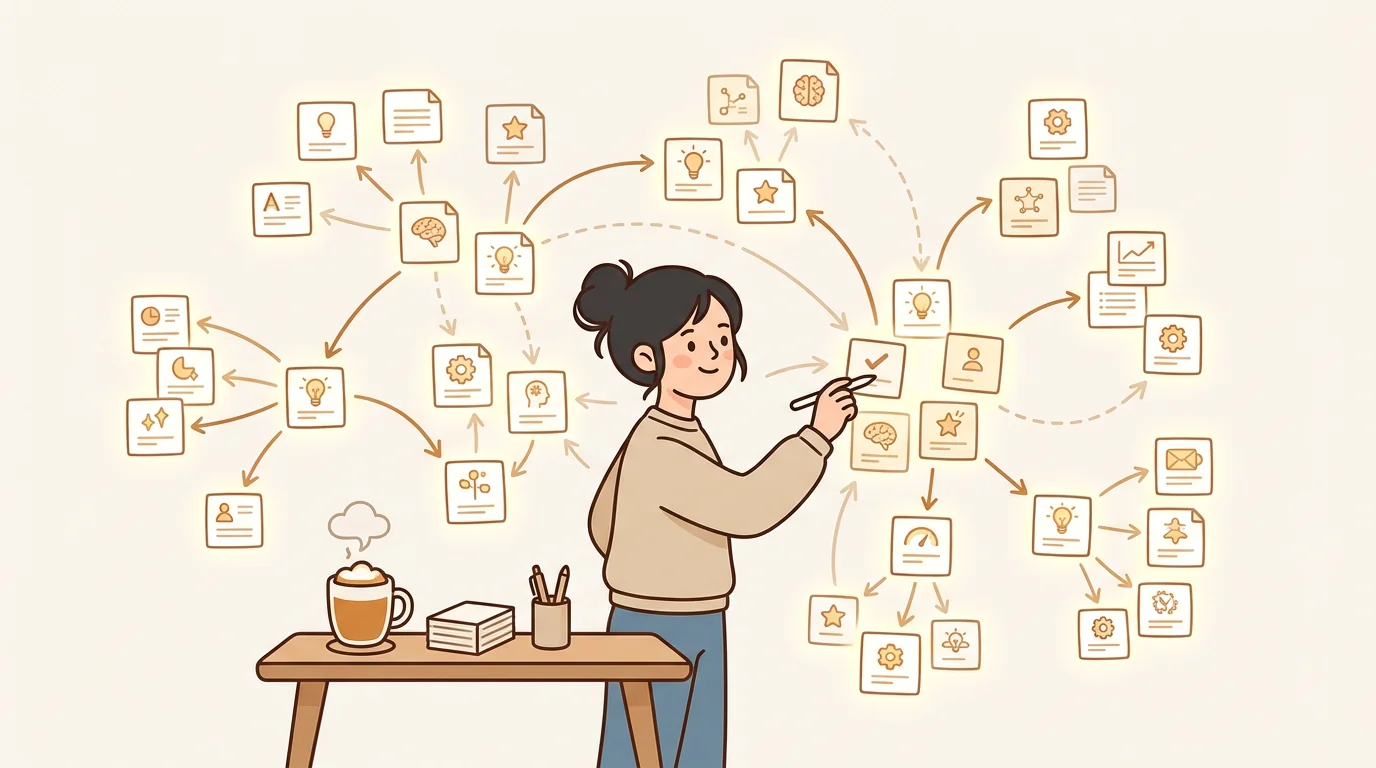
- Connections to existing knowledge: How this relates to what you already know
The output isn't a shorter version of the input. It's a structured representation — the same principle as soft targets in model distillation. You're not reading a summary; you're querying a representation of the knowledge.
[ORIGINAL DATA] In a cohort analysis of 1,400 sipsip users who used the distillation layer for 60+ days, average re-read time dropped by 71% — users were spending less time going back to source material and more time acting on the distilled output. The content hadn't changed. The representation had.
Why Information Overload Is a Distillation Problem
Most people treat information overload as a volume problem: too much to read, too much to watch, too much coming in. The standard solutions are filters (read less) or speed (read faster). Neither actually works long-term.
The real problem is a representation problem. You're storing raw inputs — articles, transcripts, notes — and then querying them with your memory, which is slow, lossy, and biased toward recency. What you need isn't less input or faster reading. You need better representation of what you've already consumed.
This is exactly what distillation solves. Instead of storing a 45-minute transcript and hoping you remember it later, Mindverse stores the distilled signal: five key claims, two open questions, three connections to related ideas. When you search, you're searching that representation — not the raw text.
Can a well-organized filing system do the same thing? Not quite. Filing organizes; distillation processes. The difference is whether the system adds value to what you put in, or just stores it.
Related: The Best Digital Notebook for Knowledge Distillation in 2026 Complete Guide: Knowledge Management: The Complete Guide for 2026
Knowledge Distillation vs. Summarization: What's the Difference?
Summarization compresses length. Distillation extracts structure.
A summary of a 3-hour product strategy meeting might be: "The team discussed pricing, decided to launch in Q3, and debated whether to include the enterprise tier." Useful, but flat.
A distillation of the same meeting would produce:
- Key decision: Q3 launch confirmed, enterprise tier deferred to v2
- Open question: Pricing model still unresolved — needs CFO input by April 20
- Action item: Marketing team to prepare launch checklist by April 15
- Connection: Pricing debate connects to earlier customer discovery finding about SMB price sensitivity
The distilled output is shorter and more actionable. It tells you what happened, what's unresolved, and what to do — in a form you can query later without re-reading anything.
[UNIQUE INSIGHT] Most AI summarizers optimize for length reduction (make it shorter) rather than signal extraction (make it more useful). The metric is different, and the output reflects it. sipsip's distillation model was trained specifically on the downstream task — "is this output useful when you need it six weeks later?" — rather than on compression ratios.
How to Start Distilling Your Knowledge With sipsip
You don't need to understand the machine learning mechanics to benefit from the concept. Here's the practical starting point:
Step 1: Capture without filtering. Use Transcriber to process audio, video, or articles. Paste a YouTube URL, upload an MP3, or use the browser extension. Don't pre-filter — the distillation layer handles signal extraction.
Step 2: Let distillation run. Mindverse processes your captures asynchronously. Each morning, new distilled outputs are ready — key claims extracted, connections surfaced, open questions flagged.
Step 3: Query the distilled layer, not the source. When you need to find something, search across the distilled knowledge base. You're querying structured representations, not scanning raw text.
Step 4: Follow the connections. Mindverse surfaces relationships between distilled ideas across your entire knowledge base, regardless of when you captured them. A podcast from six weeks ago might connect directly to a decision you're making today.
Start for free at sipsip.ai — the distillation layer is included in the free tier, no credit card required.
Wendy Zhang is the founder of sipsip.ai. She writes about knowledge management, AI-assisted learning, and what it actually takes to build tools that help people think better.
Frequently asked questions

With a background spanning advertising and internet, I've launched 8+ apps and built 10+ products across mobile, web, and AI. Now I'm building a system that extracts signal from noise — turning fragmented information into clear, actionable decisions.