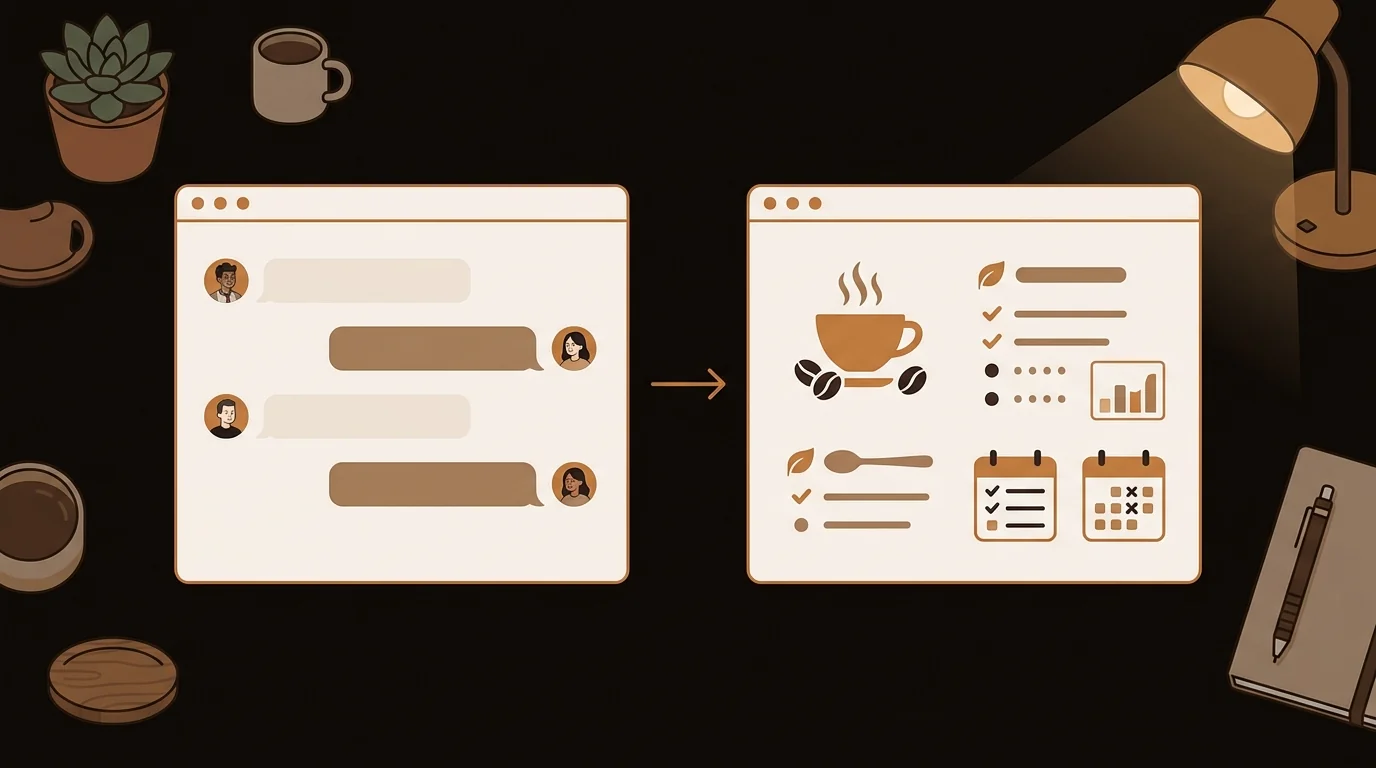
Summarizing a YouTube video with ChatGPT takes about 3 minutes if you know exactly what to do. Most guides skip the hard part: getting the transcript into ChatGPT in the first place. This post covers all three methods — including the ones that actually work in 2026.
What You'll Need Before You Start
ChatGPT cannot watch a YouTube video. It reads text. That means your first job is always getting the transcript into a format ChatGPT can process. Once you have the text, the summarization is the easy part.
There are three routes from YouTube URL to finished summary:
| Method | Time | Cost | Works on Free ChatGPT? |
|---|---|---|---|
| Manual transcript copy | ~3 min | Free | ✅ Yes |
| Browser extension | ~30 sec | Free | ✅ Yes |
| ChatGPT Browse mode | ~1 min | Requires Plus | ⚠️ Sometimes |
Method 1: Manual Transcript Copy (Free, Always Works)
This method works on any ChatGPT plan and any YouTube video with captions.
Step 1: Get the YouTube transcript
- Open the YouTube video in a desktop browser.
- Click the three-dot menu (⋯) below the video (next to Share and Save).
- Select "Show transcript" from the dropdown.
- Click "Toggle timestamps" at the top of the transcript panel to remove time codes.
- Click inside the panel, press Ctrl+A (Cmd+A on Mac) to select all text, and copy.
No transcript button? The video creator has disabled captions. Skip to Method 3, or use sipsip.ai's Transcriber which can generate captions from the audio directly.
Step 2: Paste and prompt in ChatGPT
Open ChatGPT and use this prompt:
Summarize this YouTube video transcript in 5 bullet points. Then give me 3 key takeaways I can act on. Here is the transcript: [paste your transcript here]
ChatGPT returns a clean summary in 10–15 seconds.
Limitations of this method:
- Manual copy-paste for every video
- YouTube mobile app has no transcript button — you need a desktop browser
- Very long videos (2+ hours) may approach token limits on the free tier
Method 2: Browser Extension (Fastest Manual Method)
Several Chrome and Firefox extensions automate the transcript-injection step, placing a "Summarize" button directly on YouTube pages.
Recommended extensions (as of 2026):
- YouTube Summary with ChatGPT & Claude by Glasp — Adds a panel beside YouTube videos with one-click summary via ChatGPT, Claude, or Gemini. Free tier available.
- Summarize — Lightweight extension that copies the transcript with one click, ready to paste into any AI tool.
- Tactiq — Primarily for meetings, but includes YouTube transcript extraction with AI summary.
How to use the Glasp extension:
- Install from the Chrome Web Store.
- Open any YouTube video — a panel appears on the right with the transcript and a "Summarize" button.
- Click Summarize and choose your AI (ChatGPT, Claude, or Gemini).
- The extension opens your chosen AI with the transcript pre-loaded.
Limitations:
- Extensions can break when YouTube updates its UI.
- Requires a browser extension (not available on mobile or in some work environments).
- Still requires you to have ChatGPT open.
For a comparison of the major transcript extensions, see 7 Best YouTube Transcript Generators in 2026.
Method 3: ChatGPT Browse Mode (Requires ChatGPT Plus)
ChatGPT-4o with Browsing enabled can sometimes access YouTube video pages directly.
How to use it:
- In ChatGPT, make sure you're using GPT-4o (not GPT-4o mini).
- Paste the YouTube URL into the chat.
- Ask: "Summarize this YouTube video: [URL]. Give me the main points and key takeaways."
How reliable is this?
In our testing at sipsip.ai, Browse mode successfully summarized approximately 70% of videos we tested. It fails when:
- The video relies on the audio channel more than on-screen text
- Captions are disabled
- The video is very new (not yet indexed)
When it works, the result is fast. When it doesn't, you get a summary of the video description rather than the content — and there's no warning.
ChatGPT vs. Claude vs. Gemini for YouTube summaries:
| Model | Context Window | Browsing | Best For |
|---|---|---|---|
| ChatGPT-4o | 128K tokens | ✅ Plus | Short–medium videos |
| Claude 3.5 Sonnet | 200K tokens | ❌ (API only) | Long technical content |
| Gemini 1.5 Pro | 1M tokens | ✅ | Very long videos, full movies |
| Gemini 1.5 Flash | 1M tokens | ✅ Free | Quick summaries |
When a Dedicated YouTube Summary Tool Is Better
ChatGPT-based summarization works well for occasional use. It hits friction points when you're doing it regularly:
- Volume: Summarizing 10 videos per week means 30+ minutes of manual work (copy transcript, open ChatGPT, paste, prompt, copy result).
- History: ChatGPT doesn't save a library of your past video summaries.
- Mobile: YouTube's mobile app has no transcript button, and ChatGPT Browse on mobile is unreliable.
- Multi-source: ChatGPT only handles text you provide. It can't summarize a podcast, PDF, and YouTube playlist in the same workflow.
sipsip.ai's Transcriber was built to solve these friction points. Paste any YouTube URL, podcast link, PDF, or article — and get a summary, key points, and full transcript in one step. No prompting, no copy-paste, no extension required.
For users who want YouTube (and podcast, article) summaries delivered automatically every morning, the Daily Brief monitors your subscribed channels and sends digests to email, Discord, or Telegram.
ChatGPT YouTube Summary vs. sipsip.ai: Quick Comparison
| ChatGPT (Manual) | ChatGPT + Extension | sipsip.ai | |
|---|---|---|---|
| Steps to get a summary | 5–7 | 2–3 | 1 |
| Works on mobile | ❌ | ❌ | ✅ |
| Handles audio-only (no captions) | ❌ | ❌ | ✅ |
| Saves summary history | ❌ | ❌ | ✅ |
| Supports PDF + podcast + article | ❌ | ❌ | ✅ |
| Free tier | ✅ | ✅ | ✅ (20 credits) |
The right choice depends on your volume. For 1–2 videos a week, ChatGPT is fine. For regular research or content consumption, a dedicated tool pays for itself in time saved within the first week.
Related: The Best YouTube Video Summary Prompts for ChatGPT & Claude — How to Get a YouTube Transcript
Frequently asked questions

With a background spanning advertising and internet, I've launched 8+ apps and built 10+ products across mobile, web, and AI. Now I'm building a system that extracts signal from noise — turning fragmented information into clear, actionable decisions.