I have a folder on my laptop called "to-read" with 340 items in it. I've opened it maybe eight times. It's not that the content isn't useful — it's that saving something and actually learning from it are completely different problems, and I'd been solving only the first one.
I'm a senior software engineer in Berlin. I work across three different stacks, attend somewhere between 15 and 25 conferences and technical talks per year (mostly recorded), and read more architecture decision records than any human should. For years, I had a personal knowledge management problem that I kept trying to solve with better folder structures.
It didn't work. Here's what actually did.
The Problem With Engineering PKM
The knowledge that matters most to engineers isn't in blog posts — it's in talks. Conference keynotes. Architecture reviews. Incident post-mortems. Design discussions on Slack. The 45-minute technical walkthrough of distributed systems tradeoffs that your senior colleague gave at an internal tech talk three years ago.
None of that is searchable. None of it lives in my Obsidian vault or my Notion database. It exists in recordings that I saved with good intentions and never revisited, or in my memory, which is significantly less reliable than I'd like to believe.
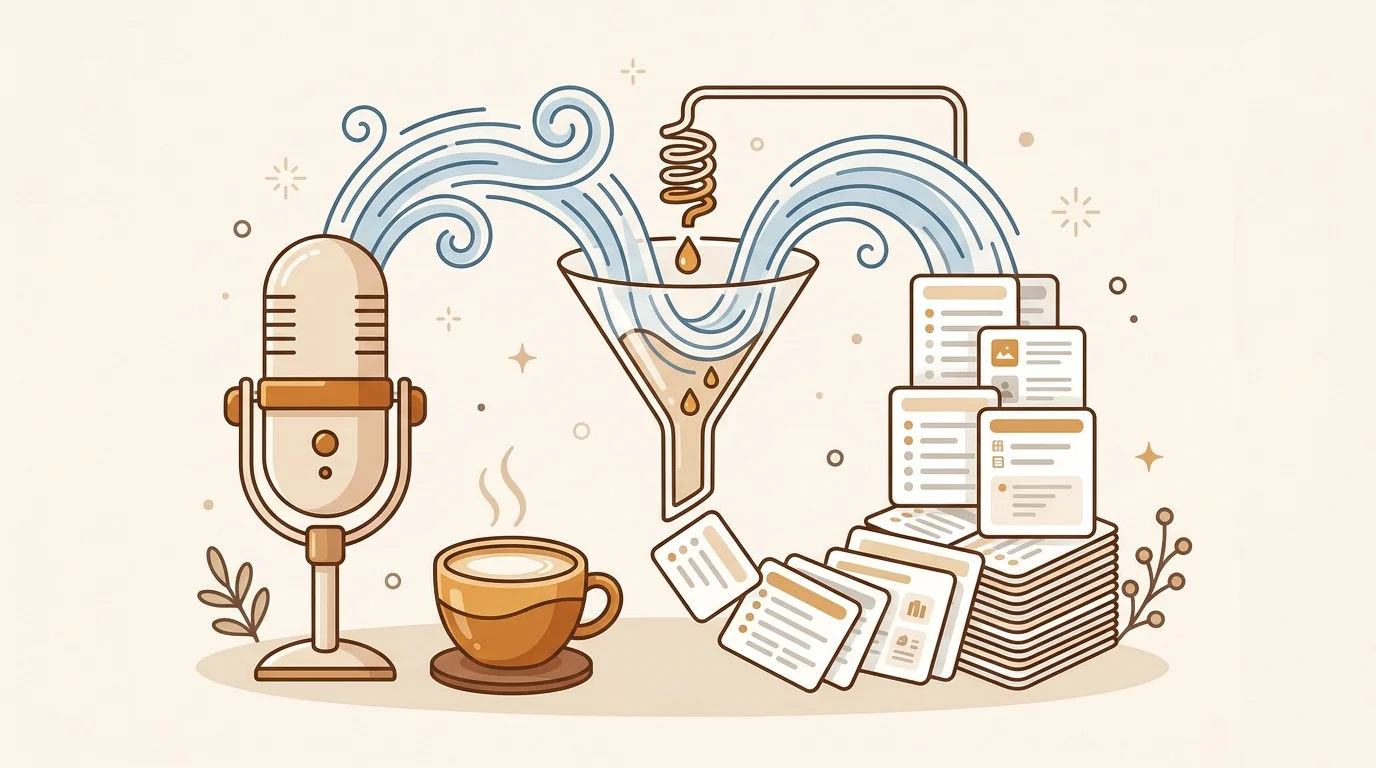
sipsip's Transcriber was the first tool I found that actually addressed this. I could paste a YouTube URL — a conference talk, a technical tutorial, a product demo — and get a clean transcript in under two minutes. That alone was useful. But the part that changed my workflow was what happened next.
What Changed With Mindverse
Mindverse sits on top of Transcriber and runs distillation on everything I add. When I paste a 50-minute Systems Design conference talk, I don't get a 50-minute transcript I'll never read. I get:
- 6 key technical claims (specific, concrete assertions — not summaries)
- 3 open questions the talk raised but didn't fully resolve
- 2 architectural decisions discussed, with tradeoffs noted
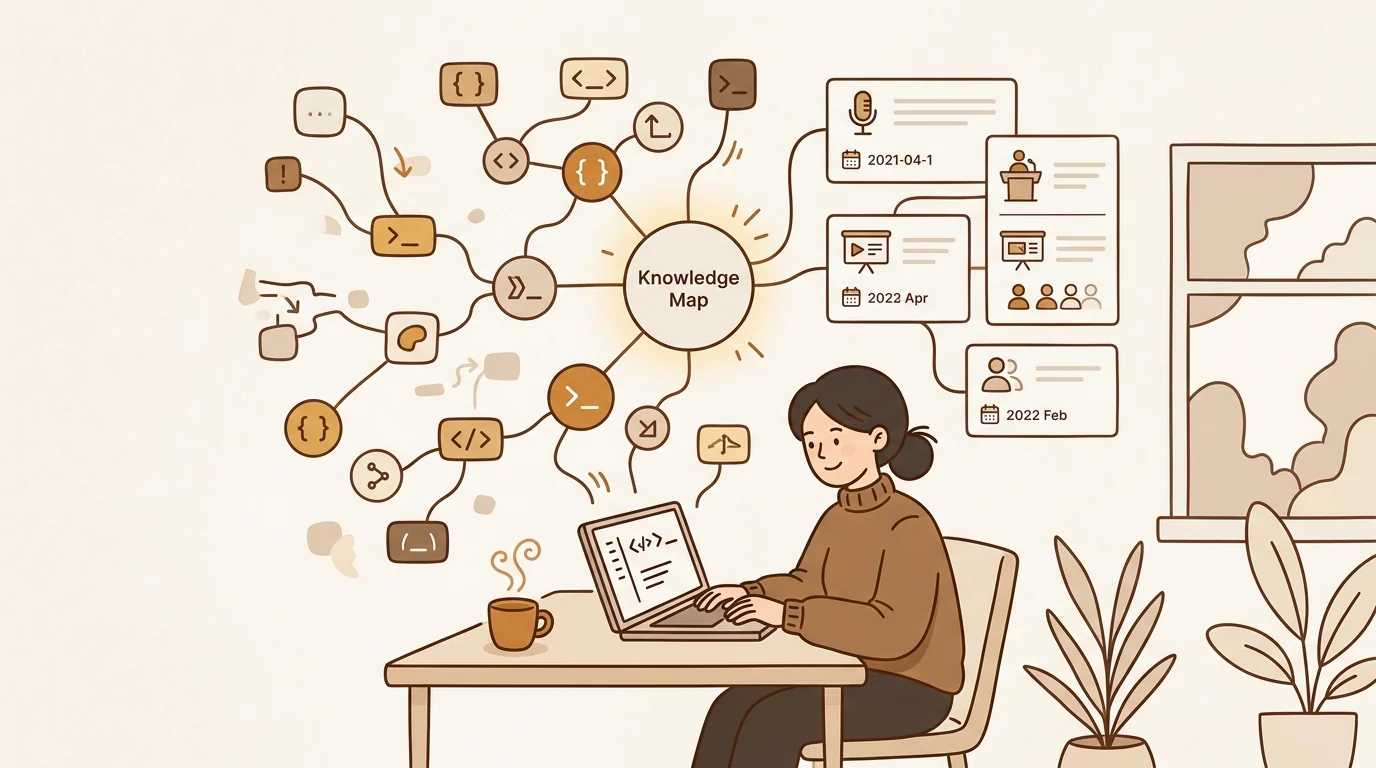
- Connections to other items in my knowledge base that touch similar concepts
That last part is what I didn't expect. Three weeks after adding a talk about event sourcing patterns, Mindverse surfaced it while I was adding notes from a different talk about CQRS. I hadn't made that connection manually. The system did.
My Current Workflow
Conference talks and tutorials: I paste the YouTube URL directly into sipsip. Takes 30 seconds. Transcription and distillation run in the background. I check the distilled output the next morning in about 2 minutes.
Internal tech talks: My team records all significant internal talks. I upload the audio file — same pipeline, same output. Our informal architecture decisions now have a searchable record.
Documentation and RFCs: I use the browser extension to clip anything I'm reading and want to reference later. The extension captures the full content, not just the URL. Six months of relevant docs, distilled and connected.
Architecture decisions: When we make a significant technical decision, I record a quick voice memo explaining the context and tradeoffs. Mindverse transcribes and distills it. Now the reasoning behind our decisions has a home.
The distillation layer processes everything asynchronously. I don't manage it — it just runs. The knowledge base builds itself from content I was already consuming.
What I Found After Three Months
After 90 days of using Mindverse as my primary PKM tool, my knowledge base had 340 distilled items. Of those, I had actively searched for and retrieved 89 — things I needed during actual work, not just review sessions.
More importantly, Mindverse surfaced relevant connections 23 times during that period without me searching. Seventeen of those connections were genuinely useful. The others were close misses. That's a 74% relevance rate for unsolicited surfacing, which is better than most of my own memory-based connections.
The "to-read" folder still has 340 items in it. But now I have a 340-item knowledge base that I've actually learned from.
Related: Personal Knowledge Management Best Practices for 2026 Complete Guide: Knowledge Management: The Complete Guide for 2026
What I'd Tell Other Engineers
Start with conference talks you've already saved but never re-watched. Pick 10. Paste the YouTube URLs into sipsip. Let Transcriber and Mindverse process them. Look at what the distillation extracted.
That's the experiment. If the output accurately captures what you'd have highlighted watching the talk again, you've found your PKM system. If it misses important things, you'll know exactly what to adjust.
Start for free at sipsip.ai — the free tier covers enough to run the experiment properly.

I spent years losing track of tech talks, architecture decisions, and documentation. sipsip's Mindverse gave me a PKM system that builds itself from the content I already consume.