I wrote before about using sipsip to get transcripts of English tech talks while I was learning English. That worked well. But there's a second problem I've been dealing for longer: content that exists only in Japanese or Chinese — and that nobody has translated into English at all.
The Content I Was Missing
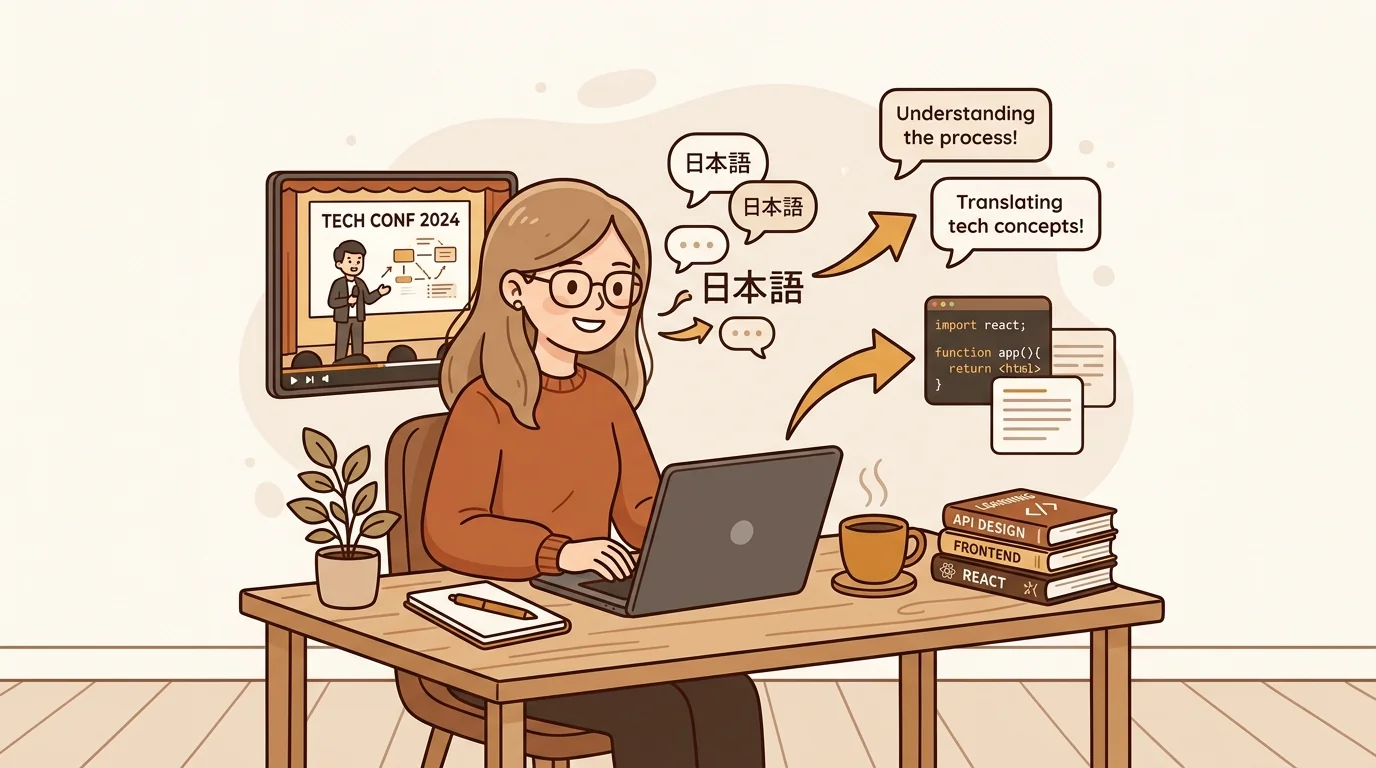
I'm a backend developer in Seoul. A lot of the technical content I follow is in English, but two other languages matter a lot in my field: Japanese and Chinese. Japan has a significant developer community that produces high-quality conference talks, technical blog posts, and YouTube explainer videos — mostly staying in Japanese. The same is true for Chinese-language content from developers in China and Taiwan: detailed system design talks, performance optimization breakdowns, AI application tutorials.
Some of this content gets translated into English eventually. Most of it doesn't. The talks I wanted to watch had no English subtitles, no translated transcripts, no community translations. Before sipsip, my options were: struggle through content I couldn't understand, or skip it.
What I Tried First
YouTube's auto-translation for Japanese is noticeably weaker than for European languages. Technical vocabulary — function names, framework terminology, performance metrics — often gets transcribed incorrectly and then translated incorrectly on top of that. A Japanese speaker presenting about database indexing would come through with wrong terminology and garbled sentences. I couldn't follow the technical argument.
I also tried pasting transcripts into Google Translate and DeepL. Better translation quality, but I had to get the transcript first, which wasn't always easy, and the full verbatim translation of a 40-minute talk was a lot of text to read through without knowing where the important parts were.
How sipsip Translation Works for This
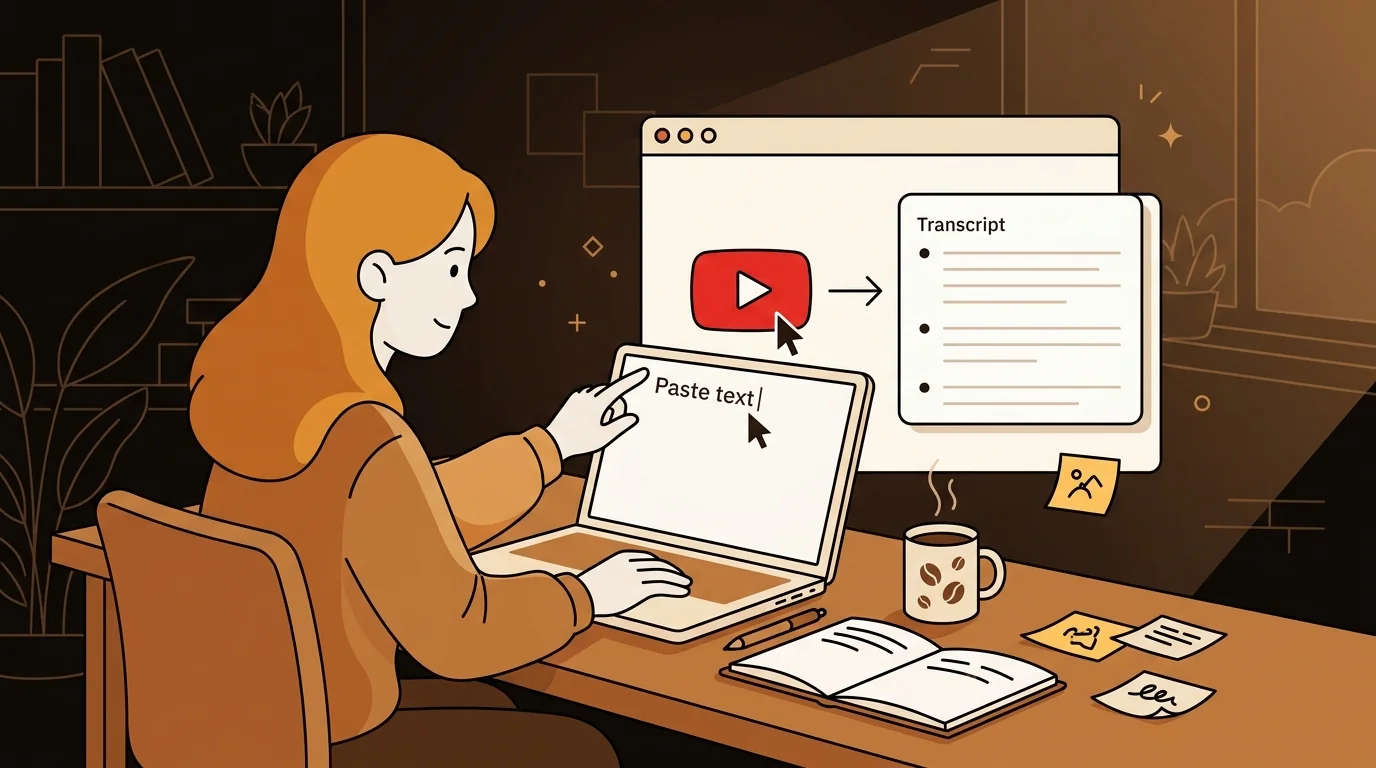
The workflow is straightforward: I paste the YouTube URL into sipsip's Distill page, change the output language to English, and submit. For YouTube URLs, sipsip gives me:
- The full English translation of the spoken content
- A summary of what the talk covers
- Key points — the main technical claims, specific numbers, and conclusions
That third item — key points — is what makes this work for technical content. In a 35-minute Japanese database performance talk, the key points might be:
- "The benchmark showed a 40% reduction in query latency using this indexing approach"
- "The team tested three connection pooling configurations before settling on this one"
- "Recommendation: avoid this pattern for write-heavy workloads above X transactions per second"
Those points are what I actually need. I can read them in 2 minutes and decide whether to go deeper into the full translation.
A Specific Example
There was a Japanese YouTube series on building distributed systems — eight videos, 30–40 minutes each. No English subtitles anywhere. I pasted each URL into sipsip with English output. For each video I got:
- Full translated transcript to read if I wanted
- A summary of the system design choices covered
- Key points with the specific technical decisions and tradeoffs
I watched none of the videos. I read all the translations. The series contained genuinely useful architecture patterns I hadn't seen discussed in English — specifically around how they handled consistency guarantees in a multi-region deployment. I ended up applying one of those patterns in a project the following month.
Without sipsip, I would have seen the series titles, noticed there were no English captions, and moved on.
Chinese-Language AI Content
The second big category for me is Chinese-language AI and ML content. There's a lot of research and applied work happening in Chinese-speaking tech communities that gets published as YouTube talks or podcasts before it shows up as English papers or blog posts. sipsip handles Chinese to English with good accuracy — better than my experience with Japanese, though both are solid.
For recent LLM application techniques and prompt engineering discussions, I've found that Chinese developer YouTube channels are often 2–3 months ahead of equivalent English content. Getting translated key points from these talks has directly affected the technical choices I make at work.
What's Different From My Transcript Use Case
My earlier use case was about using sipsip to study English — I was getting English transcripts of English videos to improve my comprehension. This use case is different: I'm not studying the language. I just need the content to be accessible in a language I can read.
The translation feature handles this completely. The content isn't dumbed down for language learners — it's full technical content, just in English. I consume it the same way I consume English technical content, which means I can actually integrate it into my regular learning workflow.
The Practical Details
sipsip's translation is not perfect. For highly specialized terminology — very specific library names, obscure framework internals, regional technology company names — there are occasional mistranslations that I catch because I already know the context. I'd estimate the error rate for technical terminology at around 5–10%, which is low enough that I can follow the argument and spot the errors.
For conference talk content and tutorial-style videos, accuracy is higher — the speech is clearer and the vocabulary more standard. For casual, fast-paced conversation or videos with heavy crosstalk, I've seen more errors.
The free tier at sipsip.ai is where to start. Paste a Japanese or Chinese tech YouTube video, select English output, and see what comes back. If you've ever looked at a non-English tech video and thought "I wish I could watch this" — this is the direct solution.
Jiwon Kim is a software developer in Seoul and an active English learner who consumes most of his professional development content from YouTube.

Korean developer Jiwon used sipsip to translate Japanese conference talks and Chinese AI papers into English. Now he consumes content he would have skipped entirely before.