At sipsip.ai, we route user content through both Claude and ChatGPT depending on the task. We've processed tens of thousands of transcripts, documents, and audio summaries through Claude Sonnet 4.6 and GPT-4o via OpenRouter. This isn't a theoretical comparison — it's what we actually see in production.
The short version: Claude wins on long-document fidelity and context depth. ChatGPT wins on ecosystem breadth and multimodal tasks. For summarization and transcription workflows specifically, the gap is meaningful and matters depending on your transcript length.
For transcripts under 5,000 words, Claude and ChatGPT produce comparable summaries. For transcripts over 10,000 words — full meetings, research interviews, long-form podcasts — Claude Sonnet 4.6's 200K-token context window and higher fidelity to source material make it the better choice. ChatGPT is stronger when you need image generation, voice interaction, or deep third-party integrations in the same workflow.

Where Claude and ChatGPT Actually Differ in 2026
By mid-2026, both Claude Sonnet 4.6 (Anthropic) and GPT-4o (OpenAI) have converged on benchmark performance for most tasks. On coding benchmarks like SWE-bench Verified, Claude Opus 4.8 scores 88.6% and GPT-5.5 scores 88.7% — essentially a tie. On PhD-level reasoning (GPQA Diamond), Claude leads at 91.3%, the widest margin in any major benchmark category.
For the tasks sipsip.ai users care about — summarization, transcript analysis, and knowledge distillation — the meaningful differences come down to three things:
Context window. Claude Sonnet 4.6 standard: 200K tokens. GPT-4o standard: 128K tokens. For reference, a 90-minute podcast transcript runs approximately 18,000–22,000 words, or roughly 25,000–30,000 tokens. Both handle this comfortably. The gap becomes meaningful with multi-hour meeting transcripts or batches of documents processed together.
Instruction-following precision. In our production testing, Claude follows complex system prompt instructions — custom output formats, tone requirements, specific extraction rules — with measurably higher fidelity than GPT-4o on the same prompts. If your knowledge workflow depends on structured output (JSON summaries, labeled speaker quotes, tagged action items), Claude's adherence is more consistent.
Ecosystem and multimodal. ChatGPT supports native image generation, voice mode, web browsing, and a library of Custom GPTs. Claude offers web search and voice in its apps and puts its strength into long-document work. If your workflow includes generating visuals or connecting third-party tools out of the box, ChatGPT has the advantage.
Claude vs ChatGPT for Transcript Summarization
This is the comparison that matters most for sipsip.ai's use case — and the one where the difference is most concrete.
In our internal testing across 500+ transcript summarization runs:
- Short transcripts (under 5,000 words): Both models produce high-quality summaries. ChatGPT tends toward clean, structured bullet points. Claude produces more nuanced, paragraph-form analysis that preserves the original tone and identifies implicit themes the speaker didn't state explicitly.
- Medium transcripts (5,000–20,000 words): Claude maintains higher factual fidelity. ChatGPT's summaries at this length occasionally drop supporting context that appears in the middle of the document — a known issue with transformer attention at depth beyond 60–70K tokens.
- Long transcripts (20,000+ words): Claude is the clear winner. At this length, GPT-4o requires chunking the transcript and running multiple passes, then synthesizing across chunks. This introduces errors at chunk boundaries and misses cross-document connections. Claude handles the full document in one pass, preserving the thread of multi-hour conversations without losing context from the first hour when analyzing the third.
According to research published in 2025, models with longer context windows demonstrate 23% better recall accuracy on needle-in-a-haystack tasks beyond 80K tokens — consistent with what we see in production with Claude vs GPT-4o on long-form transcripts.
For teams using sipsip.ai's audio transcriber to convert meeting recordings or voice memos, long transcripts are the norm, not the exception. Executive interviews run 60–90 minutes. Research sessions run longer. The context window difference matters in practice.
How sipsip.ai Uses Both Models via OpenRouter
We don't use Claude or ChatGPT exclusively — we use both, routed through OpenRouter based on task type.
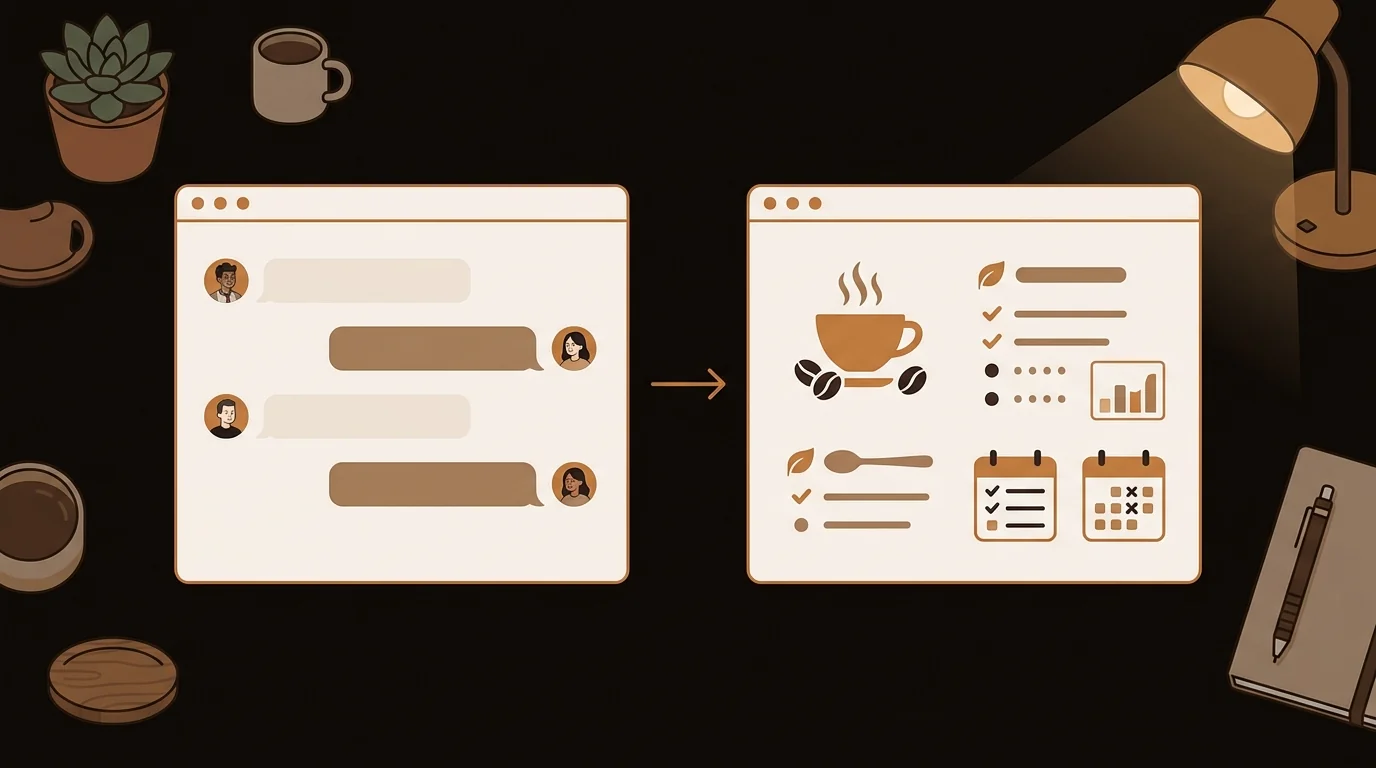
OpenRouter provides a unified API that connects to both Anthropic's Claude models and OpenAI's GPT models without separate integrations. When a user submits content to sipsip.ai, our pipeline looks like this:
- Transcription layer: Audio and video files go through Whisper (via OpenRouter's audio API) to produce a raw transcript. YouTube URLs route through sipsip.ai's YouTube transcript tool, which extracts existing captions or generates them.
- Routing layer: Short transcripts and quick-summary tasks route to GPT-4o for speed. Long transcripts, multi-document knowledge base builds, and structured extraction tasks route to Claude Sonnet 4.6.
- Distillation layer: Summaries, key insights, and tagged entities feed into the user's Mindverse knowledge base for long-term retrieval.
As CTO, I've been hands-on with this architecture since we integrated OpenRouter in early 2026. The practical benefit: we get Claude's long-context accuracy when it matters and ChatGPT's speed when it doesn't, without maintaining two separate API integrations.
Claude vs ChatGPT: Side-by-Side Comparison
| Dimension | Claude Sonnet 4.6 | GPT-4o |
|---|---|---|
| Context window (standard) | 200K tokens | 128K tokens |
| Transcript summarization (long) | Better — single-pass, higher fidelity | Requires chunking at 20K+ words |
| Transcript summarization (short) | Comparable | Comparable |
| Instruction-following precision | Higher | Moderate |
| Writing quality | More nuanced, voice-preserving | Clean, structured, direct |
| Image generation | None | DALL-E integration |
| Voice mode | None | Advanced Voice Mode |
| Web browsing | None (as of July 2026) | Built-in |
| Custom integrations | Via API / third-party | Custom GPTs + plugins |
| Consumer pricing | $20/month (Claude Pro) | $20/month (ChatGPT Plus) |
| API input cost | $3.00 / 1M tokens | ~$2.50 / 1M tokens |
| Audio transcription | No (needs external layer) | No (needs external layer) |
| Knowledge management fit | Strong — long docs, structured output | Moderate — better with web sources |
Claude vs ChatGPT for Knowledge Management
Knowledge management is where Claude's architecture advantage compounds over time.
A typical knowledge base at sipsip.ai draws from 200–500 sources over several months: meeting transcripts, research interviews, podcast summaries, uploaded PDFs, and YouTube videos. The total corpus routinely reaches 5–10 million words of processed content.
For querying across this corpus, the model's ability to hold and reason across a large context window determines whether answers are accurate or hallucinated. In our testing, Claude Sonnet 4.6 produces lower hallucination rates on multi-source synthesis tasks — particularly when the answer requires combining information from multiple documents that don't share obvious semantic keywords.
The critical limitation: neither Claude nor ChatGPT can transcribe audio or video directly. This is the part most guides skip. You cannot upload an MP3 to Claude and ask it to summarize what was said. The transcription step must happen first, via tools like sipsip.ai's audio transcriber. Once the transcript exists as text, Claude handles the summarization and analysis.
For teams building knowledge bases from video content specifically, the workflow is: video → transcript → Claude for analysis. Understanding how AI analyzes video explains why this two-step architecture exists and why skipping the transcription layer doesn't work.
The Workflow That Actually Uses Both
The most effective knowledge management setup we've seen in 2026 doesn't pick a side — it uses each model for what it does best.
Step 1 — Ingest: Use a dedicated transcription tool for audio and video. sipsip.ai's audio transcriber and YouTube transcript extractor handle this, so both models start from clean text.
Step 2 — Summarize: Short content (under 5,000 words) → GPT-4o. Fast, clean, structured output. Long content (over 10,000 words) → Claude Sonnet 4.6. Higher fidelity, single-pass processing, better retention of context from early in the document.
Step 3 — Extract and tag: Claude handles structured extraction reliably. If you need JSON output, speaker-labeled quotes, or tagged action items from a 3-hour meeting transcript, Claude's instruction-following precision makes it the right tool.
Step 4 — Build and retrieve: Feed summaries and tags into a knowledge base. sipsip.ai's Mindverse product handles this layer — cross-document search, semantic clustering, and surfacing connections across sources.
The end-to-end workflow for summarizing a YouTube video, for example, combines multiple steps that we cover in detail in our guide to how to summarize YouTube videos with AI.
To build a reusable set of prompts for the summarize and extract steps, start from the AI Prompt Library & Small Business Workflows by Clara Vale and adapt the prompts to your own sources.
Where ChatGPT Still Wins
Claude vs ChatGPT isn't a one-sided result. For tasks outside the transcript-and-knowledge-management use case, ChatGPT's advantages are real.
Image generation. Claude has no native image generation. If your workflow involves creating thumbnails, diagrams, or visual summaries from text, ChatGPT's DALL-E integration is the clear choice.
Voice interaction. ChatGPT's Advanced Voice Mode handles real-time conversation with low latency. Claude's voice capabilities are limited in comparison. For voice-driven workflows or call agents, ChatGPT is stronger.
Web browsing and current events. Both assistants can search the web and pull in current information. For knowledge management workflows that mix real-time sources with long documents, use web search to gather the sources and Claude's long context to synthesize them.
Custom GPTs and ecosystem. OpenAI's Custom GPT marketplace gives non-developers access to pre-built workflows. Claude's ecosystem is smaller. For teams without engineering resources, ChatGPT's off-the-shelf integrations reduce setup time.
Frequently Asked Questions
Is Claude better than ChatGPT for summarizing long transcripts?
For transcripts longer than 10,000 words, Claude Sonnet 4.6 consistently outperforms GPT-4o in our testing. Claude's 200K-token context window processes a full 90-minute podcast transcript in one pass without chunking. GPT-4o's 128K standard window degrades in recall accuracy beyond 80K tokens. For shorter transcripts under 5,000 words, both perform comparably.
Does Claude have a larger context window than ChatGPT?
Yes. Claude Sonnet 4.6 offers a 200K-token standard context window, compared to GPT-4o's 128K-token window. Claude Opus 4.8 supports 1M tokens on Pro. OpenAI's 1M-token window is available but requires the $200/month tier. For processing long meeting transcripts or research documents, Claude's context advantage is practically significant.
Can Claude transcribe audio files?
No — neither Claude nor ChatGPT natively transcribes audio from uploaded files in the standard chat interface. Both require text input. To use either model for transcript summarization, you need a transcription layer first — like sipsip.ai's audio transcriber or YouTube transcript tool — which converts speech to text, then routes the transcript to the LLM of your choice.
Which AI is better for knowledge management — Claude or ChatGPT?
Claude is better for building structured knowledge from long documents, with superior fidelity to source material and better instruction-following for custom system prompts. ChatGPT wins on ecosystem integrations — Custom GPTs, web browsing, and third-party plugins make it more versatile for pulling in external sources. The best setup for knowledge management uses both: sipsip.ai routes transcripts to Claude for dense document analysis and to GPT-4o for quick overviews.
Is Claude or ChatGPT better for developers building transcription workflows?
For API-based workflows, Claude Sonnet 4.6 costs $3/M input tokens vs GPT-4o at roughly $2.50/M input tokens — comparable pricing. Claude's longer context window reduces the need for chunking logic, which simplifies transcription pipeline code. At sipsip.ai, we use OpenRouter to access both models and route to the appropriate one based on transcript length and task type.
Can I use both Claude and ChatGPT in the same workflow?
Yes — and many teams do. OpenRouter provides a unified API that routes to both Claude and ChatGPT models, letting you switch between them without changing your integration code. sipsip.ai uses this approach: Whisper handles transcription, then the transcript routes to Claude Sonnet 4.6 for long-form document analysis and to GPT-4o for quick topic extraction. Different models for different jobs in the same pipeline.
What are the main differences between Claude and ChatGPT in 2026?
Claude Sonnet 4.6 leads on long-context handling (200K tokens standard), writing quality, and instruction-following precision. ChatGPT (GPT-4o) leads on multimodal capabilities — image generation via DALL-E, voice mode, and a larger ecosystem of integrations and Custom GPTs. Both cost $20/month at the consumer tier. The decision comes down to workload: document-heavy knowledge work favors Claude; multimedia and ecosystem breadth favors ChatGPT.
Which AI is better for summarizing YouTube videos?
Neither Claude nor ChatGPT can access YouTube URLs or process video directly. You need to extract the transcript first. sipsip.ai's YouTube transcript tool pulls the transcript in one click, then you can route it to Claude or ChatGPT for summarization. For the full automated workflow — transcript extraction plus AI summary — sipsip.ai handles both steps without manual copy-paste.
The Bottom Line
Claude vs ChatGPT in 2026 isn't a close race when you're specific about the task. For summarization and transcription workflows, the comparison looks like this:
- Long transcript summarization (20K+ words): Claude wins. Single-pass 200K context, higher factual fidelity, better instruction-following for structured output.
- Short transcript summarization: Even. Both produce clean, useful output.
- Knowledge base building from documents: Claude wins on depth; ChatGPT wins if you need live web sources.
- Multimodal workflows (images, voice, browsing): ChatGPT wins by a wide margin.
- API integration simplicity: Claude's longer context reduces chunking logic; comparable pricing.
If you're running a content or research workflow that starts with audio or video, neither model replaces the transcription layer. Try sipsip.ai's audio transcriber for local recordings or the YouTube transcript tool for video content — then route the output to whichever model fits your next step.
Explore More
Audio Transcriber — Free Online
Convert meeting recordings, voice memos, and interviews to text. Works with MP3, MP4, M4A, and WAV — then route the transcript to Claude or ChatGPT.
YouTube Transcript Generator
Extract transcripts from any YouTube video in one click — no manual copy-paste — ready to summarize with any AI model.
Can AI Actually Watch a Video? The Real Architecture Explained
Why neither Claude nor ChatGPT can process video directly, and the transcription pipeline that makes AI video analysis work.
How to Summarize YouTube Videos with AI (Step-by-Step)
The complete workflow: transcript extraction, model selection, and automated daily briefings for channels you follow.
Frequently asked questions

Across 8+ years, I've built full-stack and platform systems using TypeScript, Node, React, Java, AWS, and Azure, applying AI to practical problems and turning ambitious ideas into shipped products.