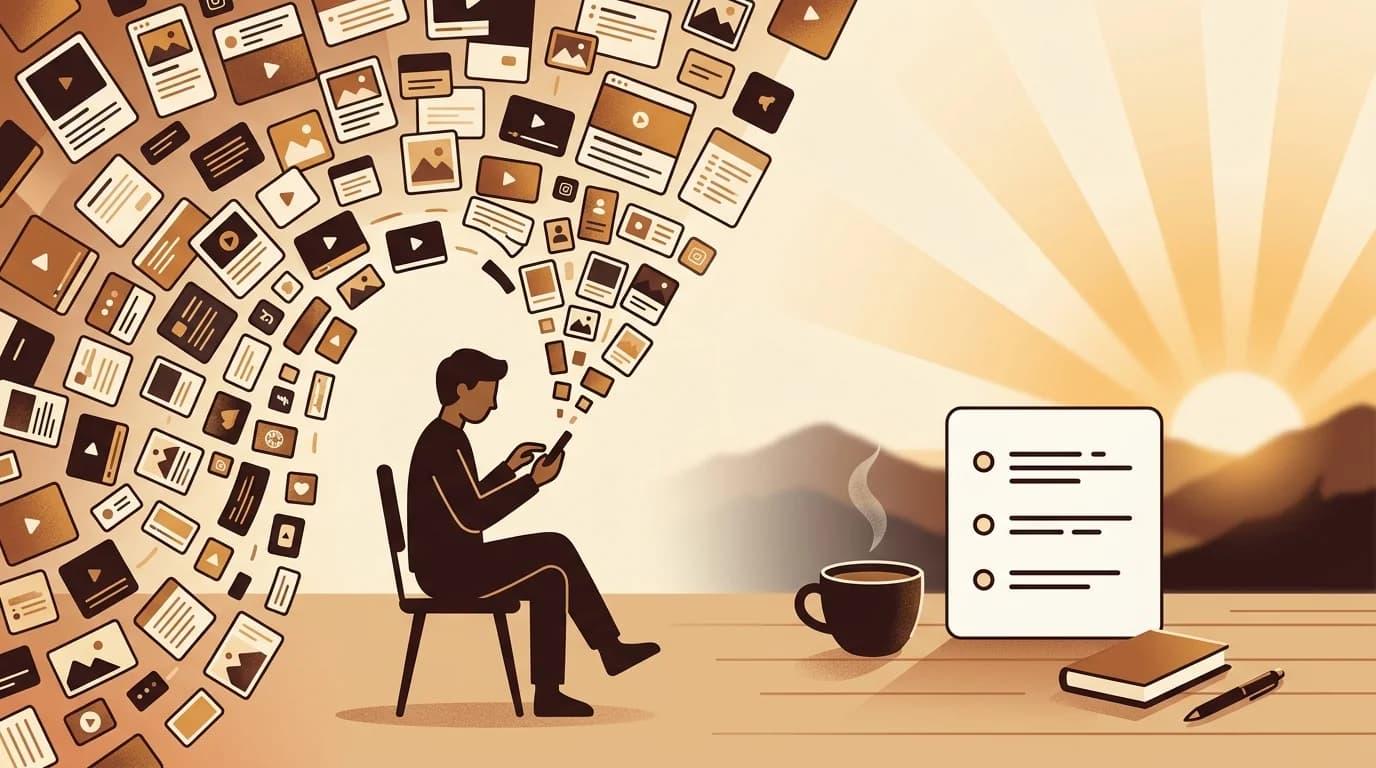
We spend an average of 7 hours per day consuming content — yet retain less than 5% of it. The attention economy has won, and we are its casualties.
The Problem with Passive Consumption
YouTube, TikTok, and podcasts have made it easier than ever to consume expert knowledge. A 3-hour conversation with Lex Fridman and Sam Altman. A 2-hour deep dive into NVIDIA's business model. A 45-minute interview with a world-class founder.
The content is extraordinary. The problem is the format. Passive video watching is cognitively inefficient for knowledge transfer. We zone out. We rewatch. We take no notes. And we retain almost nothing.
"The average person watches 40 minutes of YouTube per day but can articulate the key insights from less than 10% of what they watched." — Content Consumption Research, 2025
Why Briefs Work
Reading comprehension studies consistently show that structured summaries — with clear headings, bullet points, and highlighted quotes — produce significantly higher retention than passive video watching.
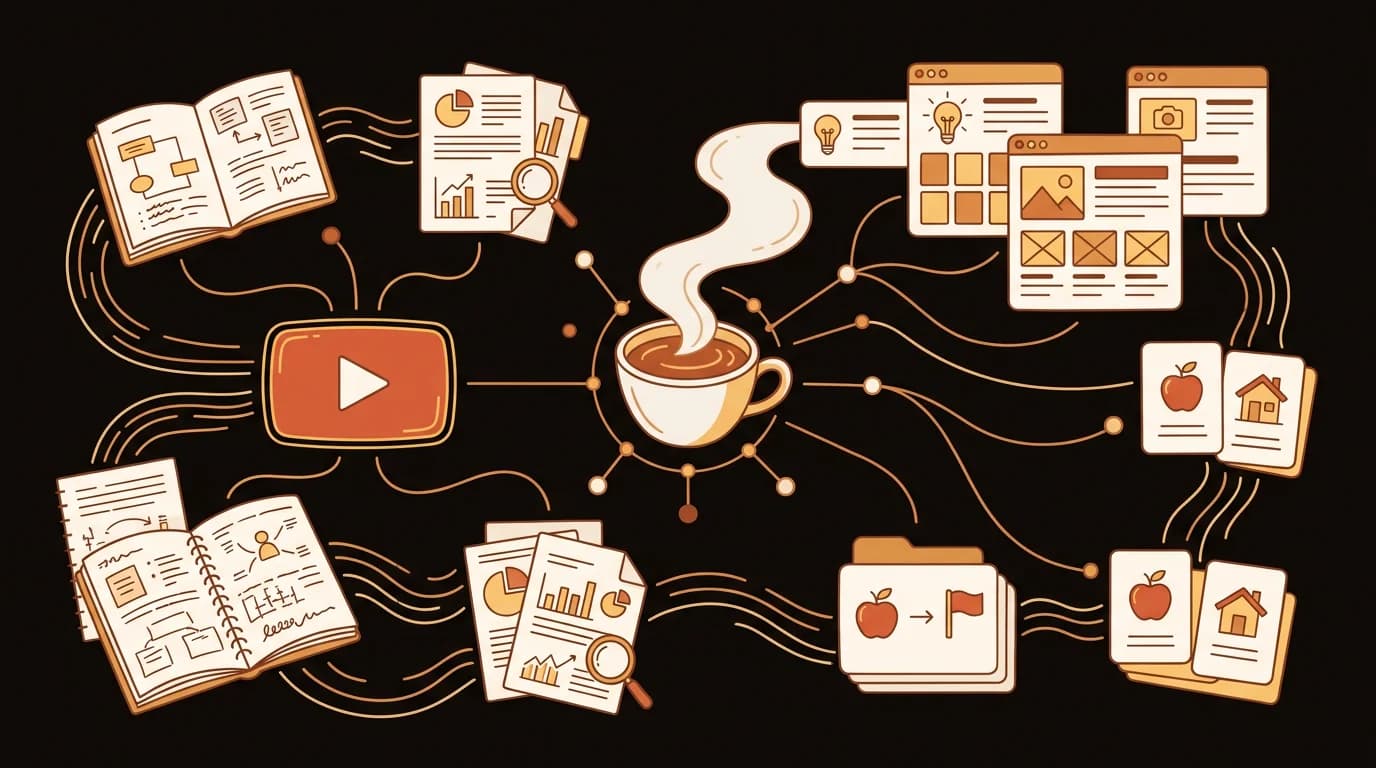
The brief format forces the AI to extract signal from noise. The three key insights. The most quotable moment. The one thing that changes how you think. When you read a well-crafted brief, you get the distillate — not the dilution.
What the research says
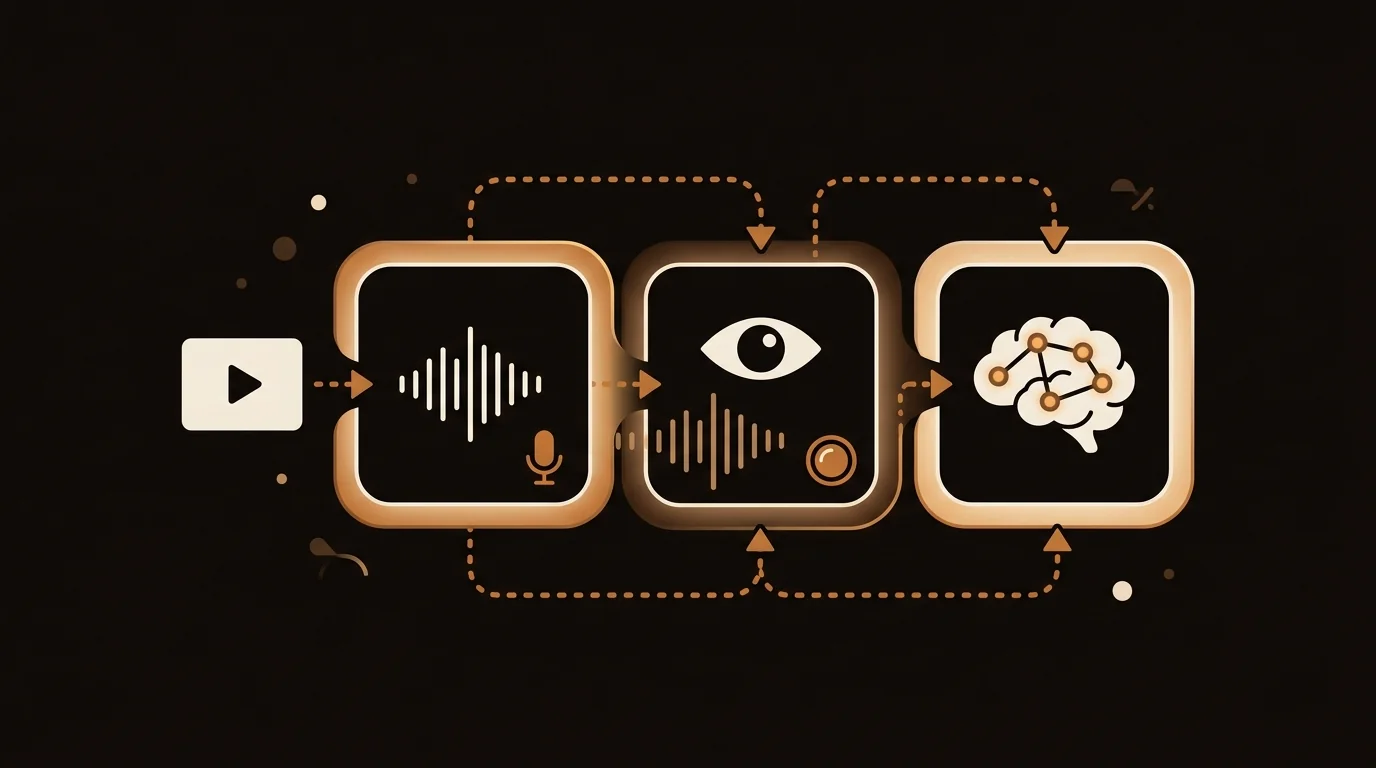
Cognitive load theory (Sweller, 1988) tells us that humans have a limited working memory. Video forces us to process audio, visual information, and meaning simultaneously. A structured text brief eliminates two of those channels — leaving only meaning.
Studies from the Nielsen Norman Group show that users reading structured web content retain 3x more information after 24 hours compared to equivalent video content.
The Shift Already Happening
Look at how power users already consume media:
- Newsletters grew 300% in subscribers between 2020 and 2024
- Podcast transcripts get more Google traffic than the audio itself
- YouTube chapters — a primitive form of structured navigation — increased watch time by 15% on average
People are already trying to escape the passive scroll. They just didn't have good tools.
The Sipsip Vision
We built Sipsip because we believe the future of media consumption is not watching less — it's consuming better. The goal isn't to replace video. It's to give you the agency to choose how deep you go.
Read the brief. Decide if it's worth your full attention. If yes, you now watch with context. If no, you've still captured the essential value in 3 minutes instead of 3 hours.
This is what we call intentional consumption — and it changes everything about how you learn, how you work, and how you stay informed.
What This Means for Content Creators
The rise of AI briefs doesn't hurt creators — it amplifies them. The best content will get more reach, not less, because the barrier to discovering and sharing it drops dramatically.
A viewer who reads your brief and finds it compelling becomes a far more engaged watcher than one who stumbled in via algorithm. Quality rises to the top when the cost of skimming drops to zero.
The Next Decade
We're at an inflection point. The tools for intelligent content consumption are finally good enough. Within five years, AI briefs will be as normal as search engines — the default way we answer "what should I know about this?"
The question isn't whether this shift will happen. It's whether you'll be ahead of it or behind it.
Try SipSip free — paste any YouTube link or podcast and get an AI brief in seconds.
Research
The neuroscience behind why briefs outperform passive video watching
Daily Brief
Set up your daily AI brief — subscribe to any YouTube channel or podcast feed
User Story
How an angel investor replaced 2 hours of morning video-scrolling with a 10-minute brief

With a background spanning advertising and internet, I've launched 8+ apps and built 10+ products across mobile, web, and AI. Now I'm building a system that extracts signal from noise — turning fragmented information into clear, actionable decisions.