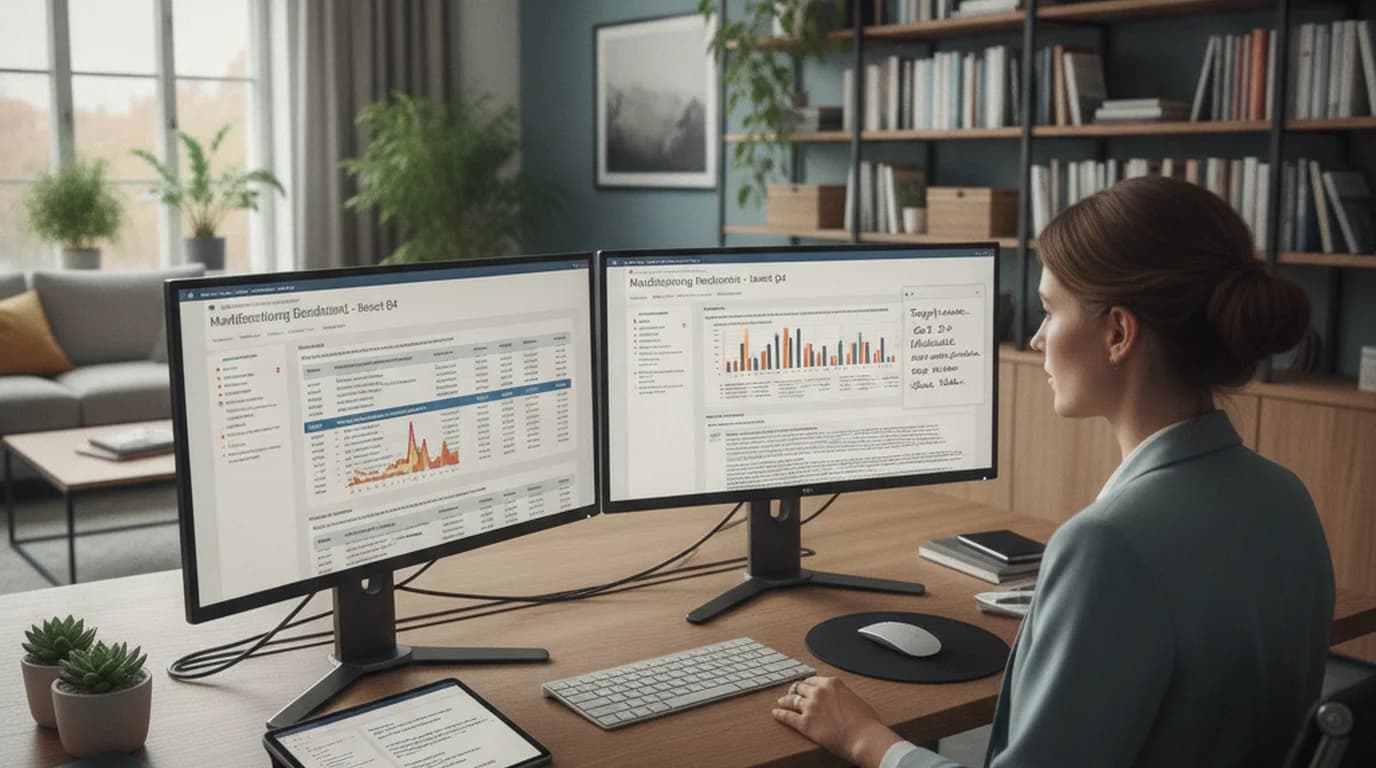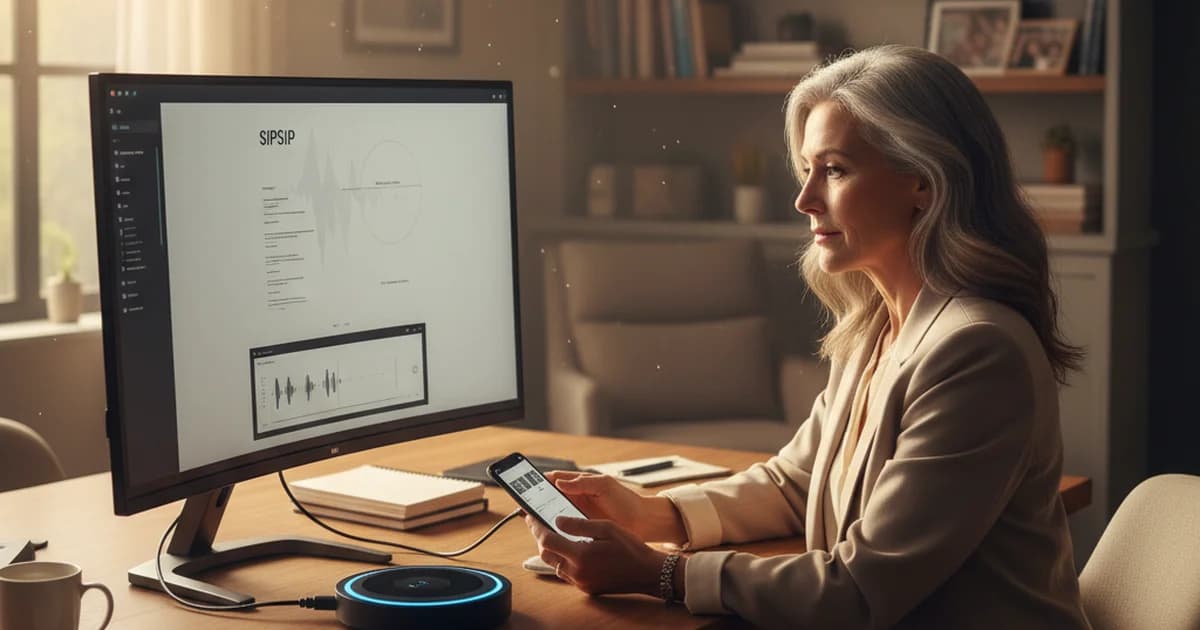
I keep a simple rule for every customer call I take: record it, transcribe it, ship the summary to the right person before I close my laptop. That loop used to take me 20–30 minutes after each call. Now it takes about 90 seconds, almost all of it on my iPhone.
Here's exactly how I learned how to record calls on iPhone and connect that recording straight into sipsip — and why I won't go back to handwritten notes.
Why I Stopped Taking Notes During Calls
I'm a Senior PM. Customer calls are half my job. For years I took notes the way everyone does: laptop open, typing while trying to listen, losing the thread whenever the customer said something unexpected.
The notes I wrote were never quite right. I'd catch the headline but miss the context. I'd note the feature request but not the frustration behind it. And by the time I got back to a follow-up email two hours later, I'd be working off a memory that had already started to compress.
The real problem wasn't my typing speed. It was that listening and writing simultaneously splits your attention. You can't give a customer your full focus while also building a structured document from what they're saying.
Recording the call and letting AI handle the transcript fixed that split.
The iOS 18 Built-In Recorder: What I Actually Use
When Apple shipped iOS 18, they finally added native call recording to the Phone app. I was skeptical — first-party features rarely match third-party tools that have been at it for years — but it's genuinely good enough for my workflow.
During any active call, a Record button (a circle icon) appears in the call controls. Tap it once. iOS announces the recording to all parties — a short audio notice, about five seconds. The recording starts. When the call ends, the file saves automatically to your Recents.
That's it. No app to install, no subscription, no merging into a second phone line. For iOS 18, this is the zero-friction path.
Note on the announcement: iOS plays a brief audio notice to everyone on the call. You cannot turn this off — Apple built it in for legal compliance, since call recording laws vary significantly by country and US state. On internal team calls or customer calls where I've already told people I record for notes, this is a complete non-issue. The announcement is brief and professional.
What to Do on iOS 17 and Earlier
My previous phone ran iOS 17. For two years before the native feature existed, I used TapeACall. The setup: install the app, tap Record during a call, and it merges a third line to capture both sides of the conversation. The recording lives in the TapeACall app when the call ends.
The one friction point is the three-way merge — it adds a second or two of setup and can occasionally drop if your signal is weak. But it works reliably on a good connection, and the M4A files it produces are clean enough for accurate AI transcription.
Google Voice is a solid free alternative if you already use it for work calls. It records incoming calls automatically when you toggle the setting in the app, and the recordings appear in your voicemail section.
How I Get the Recording into sipsip
Once the call ends and the recording is saved, here's my exact sequence:
-
Open the Phone app, go to Recents, find the call. iOS 18 shows a small waveform icon next to any recorded call. Tap it, then tap Share — I send it to Files, into a folder called "Calls."
-
Open Safari on my iPhone and go to sipsip. Drop the file into sipsip's Transcriber. Upload starts immediately.
-
While the upload runs (usually 20–30 seconds for a 30-minute call), I open my notes app and write down the two or three things I remember as important — not a summary, just anchors.
-
By the time sipsip finishes processing — typically 3–5 minutes for a 30-minute call — I have a full timestamped transcript, a structured summary, and a bulleted list of key points.
-
I copy the summary and key points into Notion, add my anchors as context, and send the relevant parts to whoever on the team needs them.
The whole post-call step takes me under two minutes. Compare that to the 20–30 minutes I spent manually summarizing before.
Citation Capsule: Apple's iOS 18 introduced native call recording to iPhones in 2024. According to Apple's own documentation, the feature is available on iPhone 12 and later running iOS 18.1+. The recording is saved as an M4A file and stored locally on the device, meaning the audio never passes through Apple's servers for storage. M4A files are natively supported by AI transcription tools including sipsip, requiring no conversion before upload.
What sipsip Actually Produces
I want to be specific here because "AI transcription" covers a wide range of output quality.
After I upload a 45-minute customer call, sipsip gives me three things:
The full transcript. Timestamped by speaker turn. If the call has two distinct voices, the diarization is usually accurate enough that I don't need to relabel turns. For calls where both speakers have similar voices or there's background noise, I'll spend two minutes spot-checking attributions.
The summary. This is the part I use most. sipsip produces a paragraph-form summary that captures the arc of the conversation — what the customer was trying to accomplish, what they shared about their situation, what we discussed, what was unresolved. It's not a bullet list of everything that was said. It reads like a briefing document.
Key points. Bullet-form extraction of the specific things that matter: feature requests, pain points, decisions made, follow-up actions. These go directly into my Notion ticket for whatever product area the call touched.
The combination of all three means I can skim the key points in 30 seconds, read the summary in two minutes, and only go to the full transcript if I need to pull an exact quote.
Citation Capsule: A 2024 study by the Korn Ferry Institute found that sales and product professionals spend an average of 11 minutes per customer call on post-call documentation — notes, CRM updates, follow-up summaries. Across a week of six customer calls, that's over an hour of administrative work per week per person. AI transcription tools that produce summaries automatically can reduce that post-call documentation time by 70–80%, based on internal benchmarks shared by teams using sipsip in their customer call workflows.
The Quality of Transcripts from Phone Call Audio
Phone audio is compressed differently than a Zoom call recorded over broadband. The codec your carrier uses strips some frequency range, and if you're on a cellular connection rather than WiFi calling, there's additional compression.
In practice, I've found sipsip handles typical iPhone call audio well. On calls where both parties are speaking clearly and not talking over each other, the transcript comes back 93–95% accurate — enough that I can use it directly without a full correction pass. I'll fix a product name here, a company name there.
The calls that need more attention: calls with background noise (I had one from a parking lot that needed a thorough edit), calls where the customer spoke very quickly in a second language, and calls where my signal was weak enough that my own audio was choppy. For those, the summary is still usable even if the raw transcript has gaps.
The fix I use for difficult recordings: I run a quick noise reduction pass in GarageBand on iPhone (free, built-in) before uploading. It takes an extra two minutes but meaningfully improves accuracy on noisy audio.
Why This Workflow Changed How I Run Discovery
The thing nobody talks about with call recording and transcription is what it does to the conversation itself.
When I stopped typing notes, I stopped half-listening. I started asking better follow-up questions because I wasn't mentally composing a sentence while the customer was still talking. I noticed tone more clearly. I caught the moments when someone's answer and their hesitation said different things.
I also started going back to old transcripts. I now have a searchable record of every customer call from the past eight months. When we were debating a product decision last quarter, I searched for a specific pain point across 40 transcripts in about two minutes. Found six customers who had described exactly the same friction in different words. That's not something you can do with hand-typed notes.
The workflow — record on iPhone, upload to sipsip, get transcript and summary — cost me nothing to set up. The iOS recorder is free. sipsip has a free tier that covered my first couple weeks of calls before I subscribed.
If you run customer calls and you're still typing notes during them, try this for one week. Record every call, upload to sipsip, see what you were missing.
Start transcribing your calls free at sipsip.ai
Explore More
Product
sipsip Transcriber — Upload Audio, Get Transcript + Summary
Related Article
What Is an Audio Transcriber — And How Do You Actually Use One?
Related Article
Best Free Audio Transcribers in 2026 — 6 Tools Tested and Ranked
Frequently asked questions

Senior PM Liam Carter shares his exact workflow for recording every customer call on iPhone and feeding the audio straight into sipsip for instant transcripts, summaries, and key points — no laptop required.