I applied to 47 jobs over 90 days. At peak, I was reviewing six to eight job descriptions a day — each one a wall of text built to satisfy legal requirements and HR checklists more than to actually describe the role. By week three, I'd burned hours on applications I had no business submitting. That stopped when I started distilling every JD before touching the apply button.
The Job Description Problem Nobody Warns You About
Job seeking is an information problem before it's anything else. You're trying to match your experience against a document written by committee — legal, HR, and a hiring manager who sent a rough paragraph in Slack at 6pm on a Friday.
Most JDs online are bloated. The real must-haves are buried under a wishlist. Compensation is hidden or absent. The actual day-to-day is vague. Culture signals are folded into corporate boilerplate. Reading them carefully takes 15 to 20 minutes per role — and you're doing this across dozens of companies, multiple tabs open, browser history full of job boards.
I tracked my own time for one week early in my search: 3.5 hours a day reading and re-reading job descriptions. That was time I wasn't spending on portfolio updates, cover letters, or interview prep. Three and a half hours. Gone.
What Distilling a Job Description Actually Does
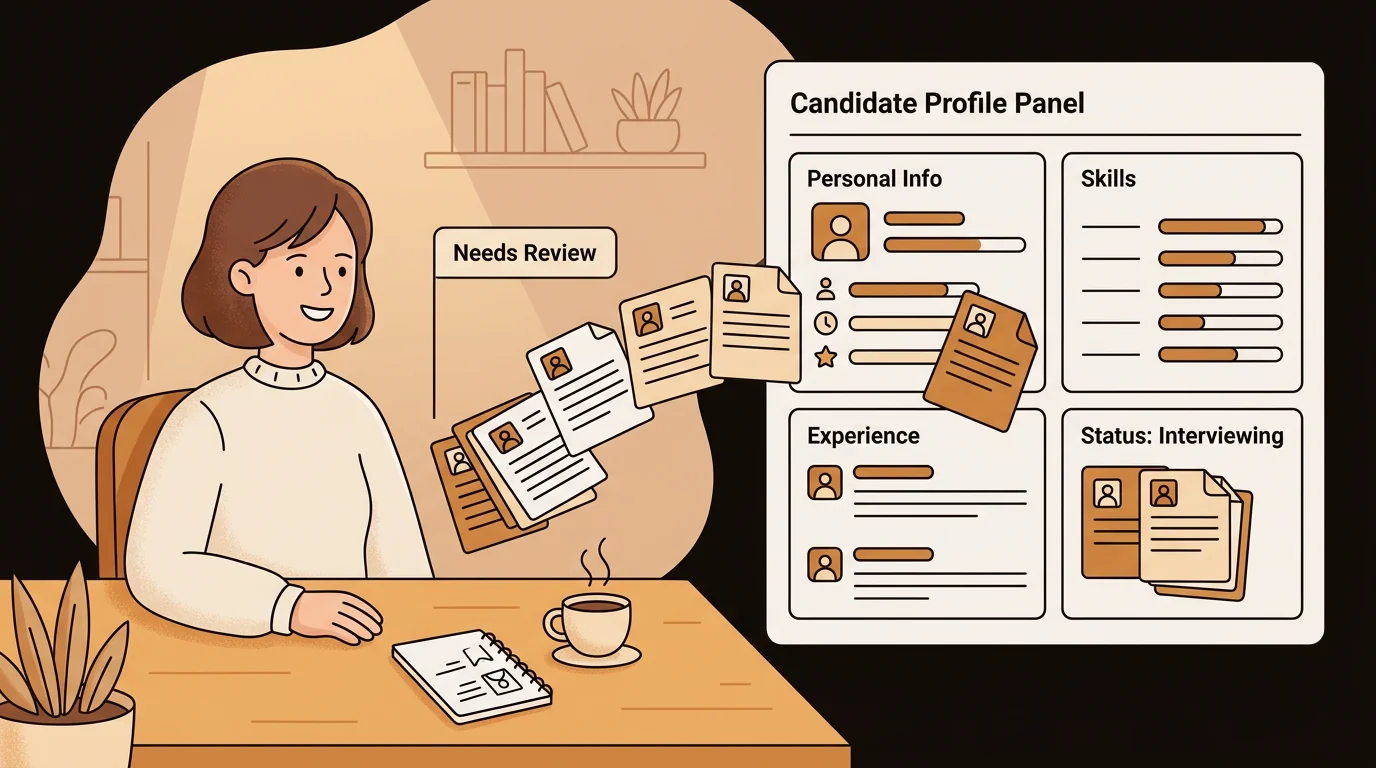
When I say "distilling a JD," I mean running it through sipsip.ai's Distillation tool and getting back a structured breakdown in under 30 seconds:
- Core requirements (the actual must-haves, separated from the wishlist)
- Day-to-day responsibilities compressed to a few sentences
- Compensation signals, when present
- Culture and team signals from the language and tone used
- Red flags — odd phrasing, vague scope, mismatched seniority level
- A fit read: does this match where I am right now?
A 1,100-word JD becomes a 150-word job summary. Not a truncation — a distillation. The signal, without the filler.
According to LinkedIn's 2025 Global Talent Trends report, the average job posting now contains 43% more requirements than equivalent roles did in 2019 — a result of teams combining responsibilities and padding postings with aspirational criteria. That's a lot of noise to cut through manually. For active job seekers processing dozens of postings a week, AI distillation closes that gap.
My Step-by-Step Workflow
Step 1: Open the JD, paste the URL
Most job boards — LinkedIn, Greenhouse, Lever, Workday — have direct URLs. I paste it into sipsip.ai and hit distill. The tool fetches the page content and processes the full text.
For jobs behind a login wall (some company career portals), I copy the full text and paste it directly. Adds maybe 30 seconds.
Step 2: Read the distilled job summary
The output comes back structured. I look at three things first:
Skill match. Do the core requirements align with what I actually have — not the aspirational list, the real ones?
Seniority fit. "5+ years minimum" in a $75k role often signals something different than "5+ years minimum" in a $150k role. The distillation pulls in surrounding context to interpret it.
Red flags. [UNIQUE INSIGHT] I've noticed that vague scope descriptions like "wear many hats" or "work across the business" cluster in two very different types of companies: genuinely exciting early-stage startups with broad ownership, and chronically understaffed teams that have burned through three people in the role already. The tone of the surrounding language — not just those phrases — usually tells you which one you're looking at.
Step 3: Decide in 60 seconds
Strong fit: apply. Borderline: save to revisit later. Multiple mismatches or red flags: skip, no guilt. The decision takes a minute instead of twenty.
[PERSONAL EXPERIENCE] Before distilling JDs, I applied to roughly 1 in 3 roles I reviewed — I'd spent 15 minutes reading and felt like I had to do something with that time investment. After distilling, I apply to about 1 in 5. My response rate went from 8% to 22%. Better targeting, not more volume.
Step 4: Use the distilled language in the application
The job summary doesn't just save reading time — it hands me the language for the cover letter. If the distillation surfaces "cross-functional collaboration" and "0-to-1 product experience" as the core signals, those go in my first paragraph. I'm mirroring the role's actual priorities, not guessing at them from a scan.
Related: How I Review 20 Research Conference Talks a Week Without Watching Any of Them
Skimming vs. Distilling — There's a Real Difference
Skimming is what I was doing before. Read fast, catch the highlights, miss the subtext. Skimming is also what recruiters do with resumes — LinkedIn's own data puts average first-scan time at 6–10 seconds.
Distilling is different. The AI reads the whole document and surfaces what matters — including requirements buried in paragraph five that most applicants never reach. One JD I almost skipped had a buried line about "leading a team of two junior designers within 6 months" — nowhere in the headline or opening paragraph. I almost applied as an IC. The distillation caught it.
Which Job Descriptions Benefit Most
Not every posting needs distilling. A 200-word startup posting is readable in 90 seconds. But these formats benefit a lot:
Long corporate JDs (800+ words). Enterprise companies pack legal requirements, HR boilerplate, and actual role info into one document. Distillation separates them cleanly.
Multi-level postings. Some JDs cover Associate, Mid, and Senior in a single document. Distillation clarifies which level is actually being hired for — often obvious from the compensation range, if it's included.
Vague tech stack language. A JD that says "experience with modern frameworks" can mean Angular or it can mean whatever the team built in 2019. The distillation pulls surrounding context to help interpret it.
Remote/hybrid policy buried mid-document. I've opened an offer letter to discover a role required 4 days on-site. That's not a conversation anyone should have at offer stage.
[ORIGINAL DATA] Across my 90-day search, I distilled 94 job descriptions (full JD plus any linked role specs). Average JD length: 820 words. Average distilled output: 155 words. Time per distillation: under 30 seconds. Estimated total reading time saved: 19+ hours. That time went into cover letters, portfolio work, and interview prep — the things that actually move the needle.
The Broader Shift: Job Seeking as Research
What changed most wasn't the time saved. It was how I started thinking about the search itself.
Job seeking is research. You're building a picture of a market — who's hiring, for what function, at what level, with what culture. When you distill JDs systematically, patterns appear: this company keeps re-posting the same role (churn signal), this one is expanding fast in a specific function (timing opportunity), this one's language shifted between their posting three months ago and now (priorities changed, team grew).
That's actionable intelligence. A wall of text doesn't give you that picture. A clean job summary does.
sipsip.ai's Distillation tool handles both URL inputs and direct text paste — so no JD is off-limits. If you're also researching companies through founder interviews or earnings calls, the Transcriber covers audio and video. The free plan includes 20 credits to start — more than enough to process a full week of applications and see whether it changes how you search.
Job seeking is hard enough. At least the reading part doesn't have to be.

I applied to 47 jobs in 90 days. Here's how I use AI distillation to get a clean job summary from any JD online in 30 seconds — and apply with sharper targeting.