I own three rental units in a mid-sized city. After two bad tenancy experiences in five years — one eviction, one lease-breach dispute — I became methodical about screening. Now I background check every applicant before I ever hand over a key.
Why Tenant Screening Reports Weren't Enough
The standard tenant screening workflow is: collect the application, pay a service $30–$50 per applicant, get a credit report and a criminal record check back in 24–48 hours. I did this for years. It's fine, but it's thin.
A credit score tells me about financial history. A criminal background check tells me if someone has a record. Neither tells me what I actually want to know before handing someone the keys to a property I own.
What I want to know is: who is this person? How have they treated previous landlords? Do they show up in eviction court records in a state the screening service didn't check? Have they been named in public disputes, lawsuits, or complaints? Do their stated employment and income details match anything findable in public sources?
A $40 screening report doesn't answer those questions. sipsip.ai's AI Investigator does.
What an AI Tenant Background Check Actually Covers
When I run a tenant background check on a new applicant, I give sipsip.ai's AI Investigator the applicant's full name and the city they claim to have lived in. I ask it to build a background dossier.
Within 15 minutes, I get back a structured report that pulls from sources a paid screening service would never touch:
Public court records and eviction filings. The AI searches across court databases, legal notice sites, and public record aggregators. Eviction proceedings are usually public — but they're scattered across county-level court systems. A national screening service often only checks a handful. sipsip.ai fans out more broadly, and I've had it surface eviction filings that a paid report missed entirely.
News, complaints, and public mentions. If an applicant has been mentioned in a local news story — a neighbor dispute, a property damage lawsuit, a noise ordinance hearing — that's findable on the open web. I've found two applicants this way in the past year.
Social signals. Publicly available social posts can reveal red flags or confirm details. I'm not looking to be invasive — I'm looking for obvious inconsistencies between what an applicant tells me and what's visible publicly.
Employment and income cross-referencing. Applicants sometimes overstate their job title or employer. A quick AI pass across LinkedIn and public company data can flag a discrepancy before I waste time on further processing.
"I found an eviction filing from two years ago in a different state that two paid screening services had both missed. That applicant would have been my tenant."
— Sofia Andersson
The Screening Report Format That Actually Helps
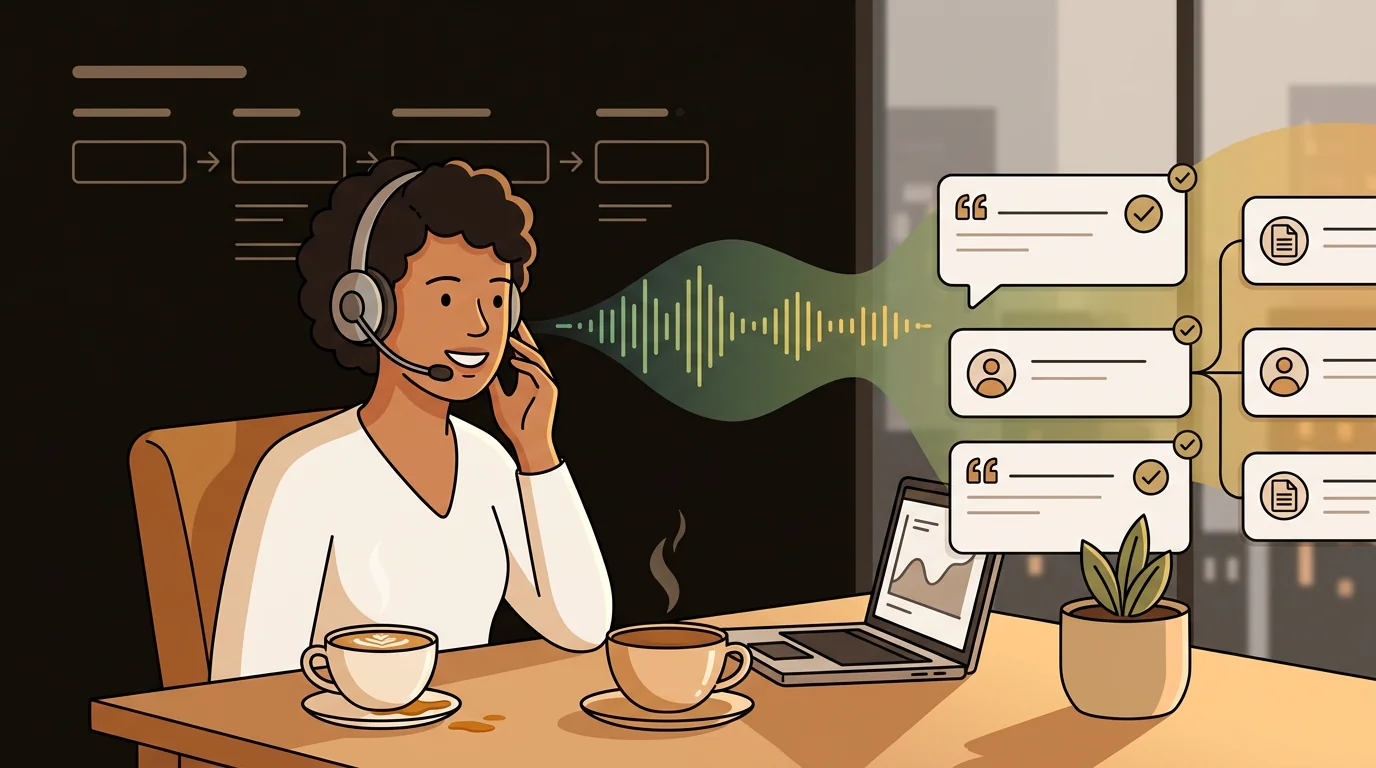
The output from sipsip.ai isn't a wall of links. It's a structured dossier: an executive readout at the top summarizing the overall picture, a list of verified findings (each one cited to a specific source), and a source trail I can follow if I want to verify anything directly.
That citation layer is the part that matters most to me practically. When I find something concerning in a tenant background check, I need to be able to point to the specific source — a court document URL, a news article, a public record — if I need to explain a rental decision. Vague AI summaries aren't useful here. A cited dossier is.
For more on how sipsip.ai structures its investigation outputs, see the AI Investigator product page.
My Full Tenant Screening Workflow
Here's exactly how I screen applicants now:
-
Receive the application. I use a standard rental application that collects full legal name, date of birth, current and prior addresses, employer, and income.
-
Run a credit and criminal check through a paid service. I still do this step — it takes 24 hours and costs $35. It produces the baseline financial and criminal record data that's formally documented.
-
Run a sipsip.ai AI background check in parallel. While the paid report processes, I give the AI Investigator the applicant's name, city, and prior city if listed. I specify that I want an eviction record search, a news and public mention scan, and an employment verification pass. This takes about 15 minutes.
-
Review both reports together. The formal credit/criminal report and the AI dossier answer different questions. Together, they give me a much fuller picture than either alone.
-
Follow up on anything flagged. If the AI surfaces something worth exploring, I ask a follow-up question directly in sipsip.ai — "find more detail on the 2023 civil case" — and it goes deeper.
Total time added to my existing screening process: about 20 minutes per applicant. What I get in return is substantially more information.
What I've Found Using This Approach
In the past 14 months, I've run AI background checks on 11 applicants. Two had issues the paid screening report didn't catch:
One had an eviction judgment from 18 months prior in a neighboring state. The paid report covered only the current state. The sipsip.ai search pulled a public court record from the neighboring county. I declined that application.
One had what appeared to be a former employer that no longer existed — the company they listed had been dissolved. The AI flagged this when cross-referencing the employer against public business registration records. When I asked the applicant about it, their explanation was plausible (the company had rebranded), but the flag prompted me to ask for additional income documentation, which I otherwise might not have.
Neither of these findings required sophisticated detective work. They required looking at public records that a standard screening service simply doesn't cover.
What This Doesn't Replace
I want to be clear about what the AI background check is and isn't.
It's a research tool, not a formal screening report. For purposes of formal documentation — credit history, criminal record checks — a licensed consumer reporting agency report is still the right tool. Those reports are governed by the Fair Credit Reporting Act (FCRA) and carry legal weight.
The AI dossier supplements that. It covers the open web, public records, and multimedia sources. It surfaces information that no paid service systematically provides. But it's due diligence research, not a regulated background check.
If you're a landlord and you haven't looked at whether your screening practices comply with local and federal fair housing law, that's worth reviewing independently. See sipsip.ai's pricing for current plan details.
Why This Matters More Now
Tenant screening services are improving, slowly. But they're still built around the same core data sources they've used for decades: credit bureaus and criminal databases.
The open web has become a much richer source of signal. Court records are increasingly digitized and searchable. News archives go back further. Social platforms are more public than people realize. An AI tool that can systematically search across all of that, synthesize it, and cite every finding is a genuinely different kind of tool — not just a faster version of the same thing.
For a landlord screening tenants, that difference is real. I've declined two applicants in the past year based on findings that would never have shown up in a traditional tenant background check. Both of those decisions were backed by public records I could verify directly.
The next time I list a unit, I'll run the same process. Twenty minutes of AI research. A cited dossier. A much clearer picture of who I'm letting into my property.
Complete Guide: AI Background Check & People Intelligence: The Complete Decision-Making Guide
Get Early Access
Get early access to AI Investigator — background checks that go deeper than any screening service
Frequently Asked Questions
Can I use AI background check results to decline a tenant?
You can use publicly available information as part of your overall screening decision, but rental decisions must comply with the Fair Credit Reporting Act (FCRA) and fair housing laws. For formal adverse action decisions based on a background check, you should use a licensed consumer reporting agency. The AI dossier is a research tool that supplements formal screening — consult legal counsel if you're unsure about your screening practices.
Does sipsip.ai's AI Investigator search eviction records?
Yes — sipsip.ai searches across public court databases, legal notice aggregators, and public record sources, which include eviction filings. Coverage is broader than most paid tenant screening services, which typically check only select state databases. That said, not all eviction records are digitized or publicly indexed, so no tool — AI or otherwise — guarantees complete coverage.
How is this different from a paid tenant screening service?
Paid tenant screening services (like TransUnion SmartMove or Checkr) pull from credit bureaus and criminal record databases. They're formally regulated and useful for documented financial and criminal history. sipsip.ai's AI Investigator searches the open web — news, public court records, social platforms, business registrations — and synthesizes everything into a cited dossier. The two tools answer different questions and work best together.
How long does an AI tenant background check take?
Typically 10–20 minutes depending on how much public information exists for the applicant. The AI Investigator returns a structured dossier with an executive summary, verified findings, and source citations. You can then ask follow-up questions to go deeper on any specific finding.

I own three rental units. I used to pay $40/tenant for screening reports that told me almost nothing. Now I use sipsip.ai's AI Investigator and get a full dossier in 15 minutes — for free.