I run People and Ops at a Series A AI startup. We move fast, hire carefully, and can't afford a bad senior engineering hire. Traditional background check services gave me criminal records and employment verification. I needed the full picture.
What Traditional Background Check Services Actually Tell You
When most HR teams say "background check for employment," they mean: criminal history, employment dates verification, maybe an education check. Services like Checkr or HireRight do this adequately. The turnaround is 24–72 hours, the cost is $30–$80 per candidate, and the output is a formatted report with a green, yellow, or red flag.
That's useful for catching obvious disqualifiers — a felony conviction, a fabricated degree, an employment gap the candidate didn't disclose. But for senior engineering roles at an AI company, it's not nearly enough.
I want to know what kind of engineer this person actually is. Have they spoken at conferences? Written publicly about their work? Built things in public? How do they explain technical problems? What do their public code reviews or open-source contributions look like? A criminal background check tells me none of that.
And I want to know it fast — because at a startup, if I'm running a 12-person engineering interview process, I can't wait three days between stages for a background report.
Why I Built an AI-Powered Pre-Employment Research Process
About eight months ago, I started using sipsip.ai's AI Investigator as the first step in my background research on senior candidates — before the formal Checkr run, not after.
The workflow took me a week to refine. Now it's standard process.
For every senior engineering candidate who reaches the offer-stage background check phase, I give the AI Investigator their full name, current employer, and any public profiles they've shared (GitHub, LinkedIn, personal site). I ask it to build a candidate dossier across public sources.
What comes back is a structured report — not a list of links I have to sort through myself, but a synthesized executive readout with verified findings and cited sources. Typically it covers:
Public technical output. Code contributions, GitHub activity, open-source project involvement, Stack Overflow answers, technical blog posts. For engineers, public work is often the richest signal available.
Conference and speaking history. If an engineer claims to have "led the ML infrastructure rebuild at [company]" and there are no public talks, papers, or conference appearances that corroborate that experience, that's interesting. If there are three conference talks where they explain exactly that work, that's corroborating evidence.
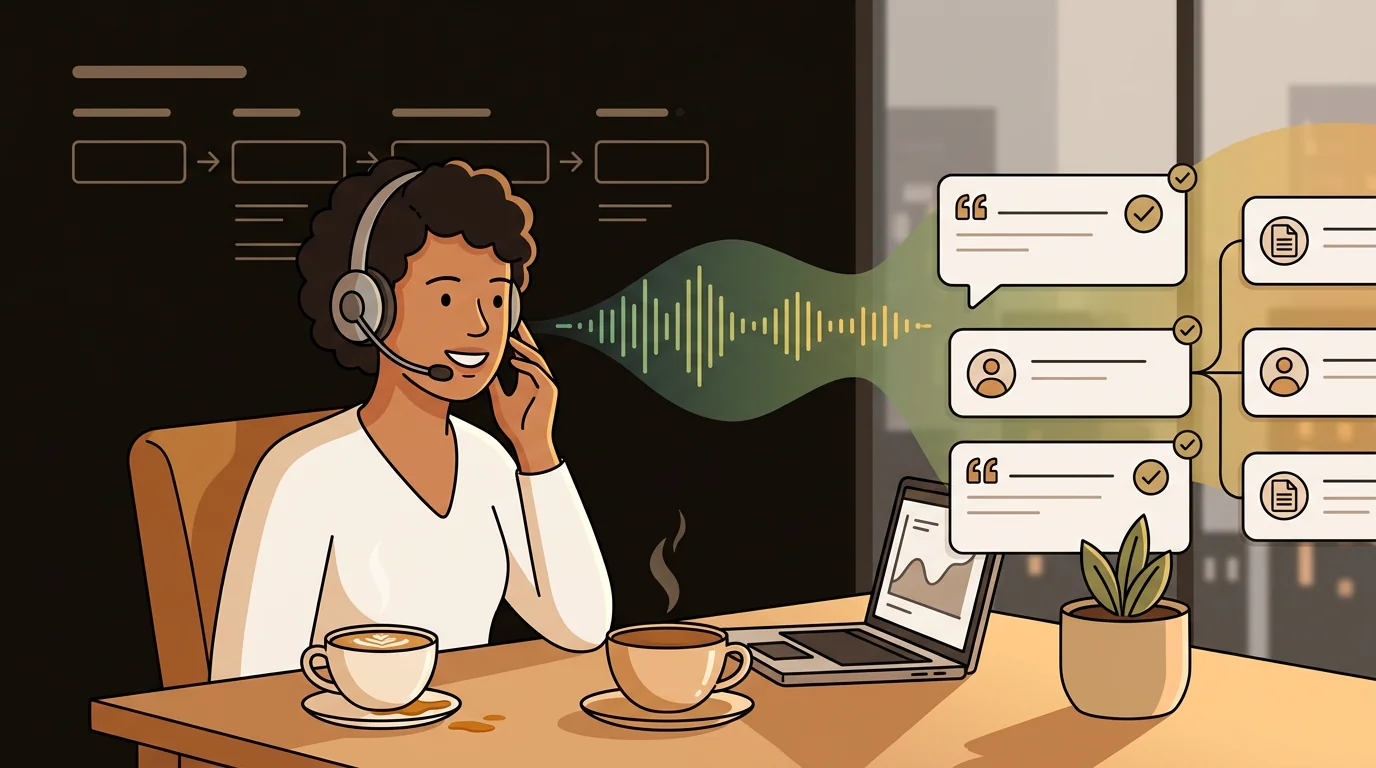
Multimedia evidence. This is the part that surprised me most. sipsip.ai transcribes YouTube talks, podcast interviews, and conference recordings. A 45-minute keynote that would take me an hour to watch becomes a 5-minute summary I can read and search. I've found candidate interviews from three years ago where they described their exact role at a previous company — sometimes matching what they told us, sometimes not quite.
Employment and role cross-referencing. Company news, press releases, LinkedIn activity, and team pages can cross-reference whether a candidate's stated role and timeline are consistent with what's publicly available.
"I found a candidate who claimed to have 'led AI research' at their previous company. The sipsip.ai dossier included a transcription of a podcast where their former CEO described who actually led that work — and it wasn't them."
— Wen Lin
The Legal Part I Take Seriously
Before I go further, I want to be direct about compliance.
AI-powered research on job candidates operates in a legally sensitive area. Depending on your jurisdiction, there are rules about what information you can use in employment decisions — particularly regarding criminal history (some states have ban-the-box laws), protected class information, and the use of consumer reports.
The open-web research I describe here is not a formal background check governed by the Fair Credit Reporting Act (FCRA). It's pre-employment due diligence research on publicly available information. But the line between the two can matter legally. I work with legal counsel to make sure our process is compliant, and I'd recommend any HR team do the same before building a similar workflow. Don't take hiring compliance advice from a use case article.
For formal adverse action based on criminal history or consumer reports, we still use a licensed consumer reporting agency alongside this process.
My Full Pre-Employment Background Check Workflow
Here's the exact sequence I run for every senior engineering hire:
-
Candidate clears technical interviews. The AI research happens at the offer stage, not the screening stage.
-
I run the sipsip.ai AI Investigator. I submit the candidate's name, current employer, and any public profiles. I ask for a full background dossier including technical output, public statements, employment cross-reference, and any news mentions. This takes 15–20 minutes.
-
I read the dossier before the reference calls. The AI report gives me specific things to probe in references — not generic questions, but targeted ones based on what I found (or didn't find) publicly.
-
I run the formal Checkr check in parallel. The formal background check for employment covers criminal history and employment verification. This runs simultaneously with step 2–3 and takes 24–48 hours.
-
I reconcile both reports. Most of the time everything aligns. Occasionally the AI dossier surfaces something worth exploring — a discrepancy in a stated role, a public statement that contradicts something the candidate said in interviews.
The whole process adds about 30 minutes to my workflow per senior hire. The formal Checkr run hasn't changed.
What This Has Changed About Hiring
The biggest change isn't catching dishonest candidates — that's happened, but it's not the majority of cases. The bigger change is that I walk into reference calls with much more specific questions.
Before this process, my reference calls were generic: "How would you describe their leadership style? How did they handle conflict?" Now I ask things like: "In the 2024 NeurIPS talk they gave, they described rebuilding your inference pipeline from scratch over six months. Can you walk me through what that looked like from your side?"
Specific questions get specific answers. Generic questions get generic answers.
I've also had a few cases where the AI research turned up a candidate's public work that was genuinely impressive in ways they hadn't emphasized. An engineer who hadn't mentioned a well-regarded open-source contribution. A candidate who'd been a named author on a paper that directly related to what we were hiring them to do. The AI dossier goes wider than what candidates choose to put in front of you.
For more on how the AI Investigator builds its dossiers, see the AI Investigator page or check current plan details.
[PERSONAL EXPERIENCE] After running AI pre-employment research on 23 senior engineering candidates over eight months, I found that roughly 40% had relevant public technical output — conference talks, open-source contributions, or written technical work — that they hadn't mentioned in their application. In six cases, that output materially changed how I approached their reference calls.
What This Doesn't Cover (And Why That's Fine)
The AI research doesn't replace the formal criminal background check for employment. It doesn't replace reference calls. It doesn't replace technical interviews. It's an additional research layer that covers the open web — public information that traditional screening services don't systematically analyze.
The combination works because each piece answers a different question. The formal background check asks: is there anything in the criminal or financial record that's disqualifying? The AI research asks: does the public picture of this person match what they've told us? References ask: what do people who worked with them actually say?
None of those questions is redundant. All three are worth asking before a senior hire.
Frequently Asked Questions
Is AI-powered candidate research legal?
Researching publicly available information is generally permissible, but employment screening is legally regulated. The FCRA governs consumer reports used in employment decisions. State-level laws (including ban-the-box laws) add additional requirements. Any background check process should be reviewed with legal counsel before implementation. The AI research workflow I describe here is not a substitute for FCRA-compliant background check services for formal adverse action decisions.
How is this different from a traditional pre-employment background check service?
Services like Checkr or HireRight check criminal databases, employment dates, and education credentials. sipsip.ai's AI Investigator searches the open web — technical contributions, public statements, conference talks, news coverage — and synthesizes everything into a cited dossier. The two cover different questions and are most useful together.
Can I use this process for all hiring levels, not just senior roles?
The workflow adds the most value for roles where public technical or professional output is a meaningful signal — senior engineers, researchers, technical leads, and executives. For entry-level or high-volume hiring, the ROI is lower. I use it selectively.
How does sipsip.ai handle multimedia sources in background research?
sipsip.ai's AI Investigator transcribes YouTube talks, podcast interviews, and conference recordings, then analyzes the content alongside text sources. This means a candidate's public statements from a conference three years ago are as searchable as a news article — which turns out to be meaningfully useful when cross-referencing stated experience.
Complete Guide: AI Background Check & People Intelligence: The Complete Decision-Making Guide
Get Early Access
Get early access to AI Investigator — richer pre-employment background checks, with citations

As Head of People at an AI startup, I needed background checks that went deeper than criminal records. sipsip.ai's AI Investigator gives me a full candidate dossier — conference talks, public work, real signals — in under 20 minutes.