Every important professional decision involves trusting someone you don't fully know. A hire. A co-founder. A vendor you're committing to a year-long contract. A counterparty in a deal. A new tenant in a property you own. An influencer you're about to partner with.
The question in all of these is the same: who is this person, really?
At sipsip.ai, we've built AI Investigator to answer that question — systematically, across every publicly available source, with citations on every finding. This guide covers every professional scenario where background intelligence matters: the signals to look for, how to investigate, and what each type of decision actually requires.
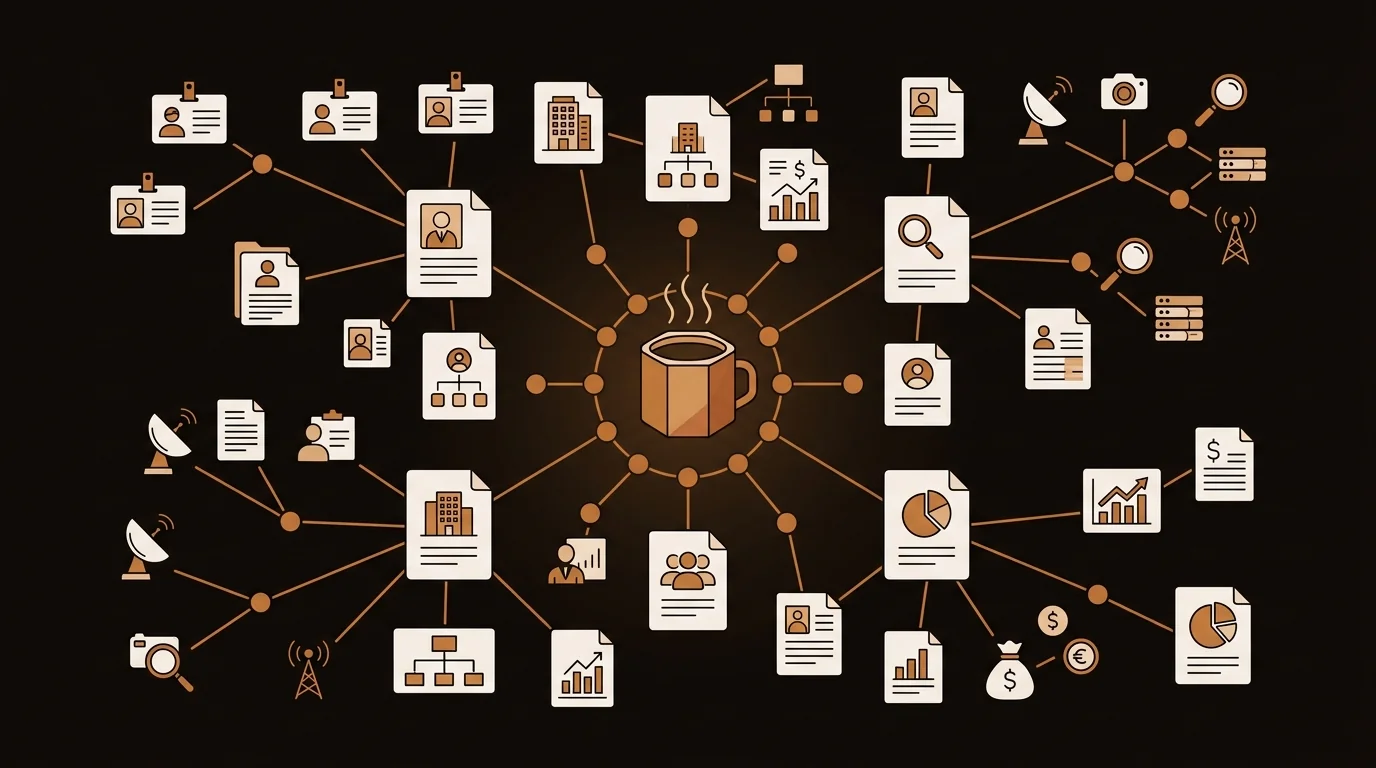
What is background intelligence? Background intelligence is the synthesis of everything publicly available about a person or company — criminal records, employment history, news coverage, multimedia appearances, public statements, court filings, and cross-source triangulation — assembled into a cited dossier that supports a specific decision. It goes beyond a traditional background check by covering sources no database service reaches.
🥇 People Background OS: Professional Trust Decisions
The highest-stakes background intelligence decisions happen in professional contexts — hiring, investing, building partnerships, and growing teams. These are the cases where a wrong call is expensive and a well-informed call creates real advantage.
Hiring Decisions: "Should I Hire This Person?"
Employment background checks are the most common use case — and the one where the gap between what a traditional check covers and what you actually want to know is widest.
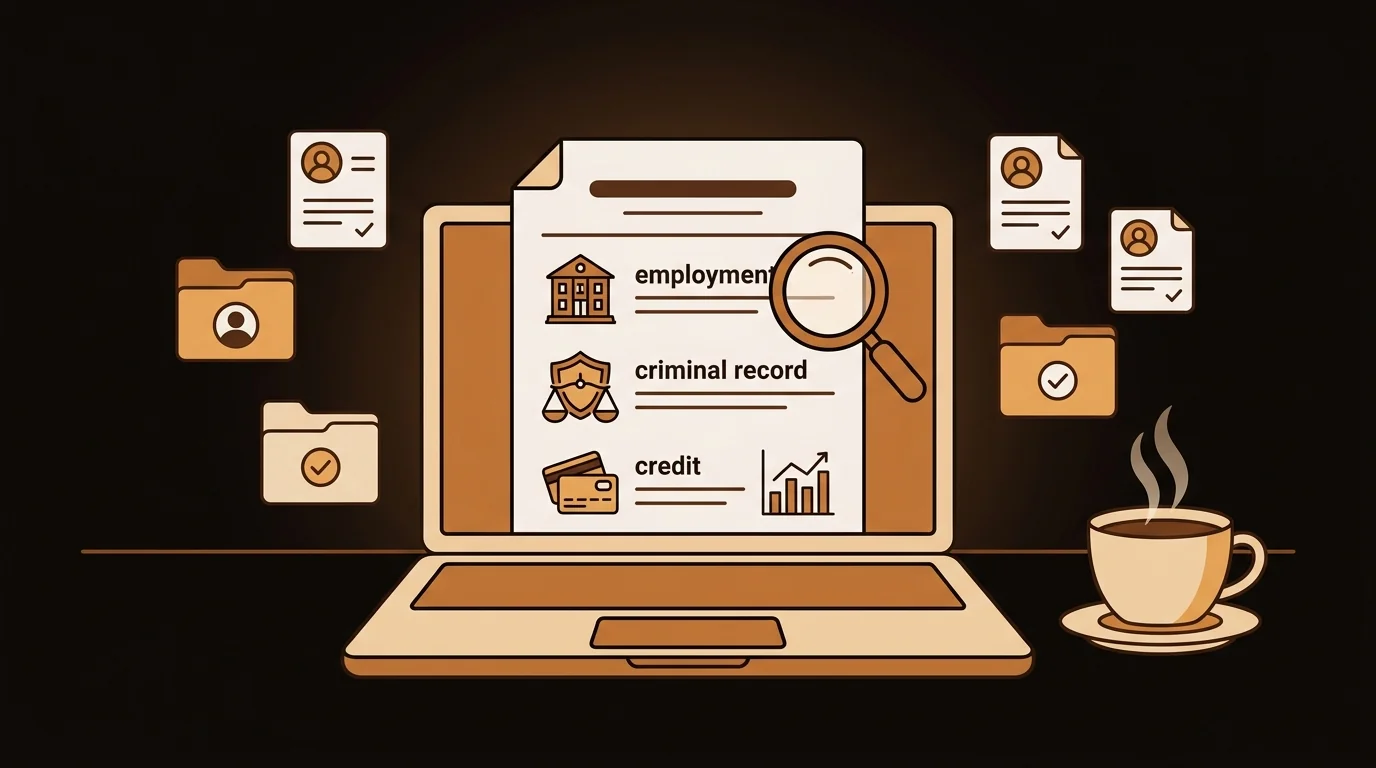
What a formal employment background check tells you: Criminal history (within database coverage), employment dates, job titles (as verified by prior employers), education credentials. What you get is a defensible paper trail about the formal record.
What it doesn't tell you: Whether the candidate's claims about their work hold up under scrutiny. Whether they've described their role differently in public than they did in your interview. Whether their peer reputation matches their self-presentation. Whether there are public signals — reviews, forum posts, public disputes, conference talks — that add context.
[UNIQUE INSIGHT] The most common HR finding from AI background research isn't a disqualifying criminal record — it's a discrepancy between how a candidate described their experience in an interview and how they've described it publicly. Title inflation, overstated scope, timeline compression. These appear in 15-20% of senior candidate investigations when checked against public sources.
A rigorous hiring background check uses both: a formal FCRA-compliant service (Checkr, HireRight) for the regulated screening requirements, and an AI investigator for the open-web layer. The formal check catches formal disqualifiers. The AI investigation catches inconsistencies and adds context.
The criminal history check question: What shows up in a criminal background check for employment depends on the jurisdiction, the lookback period, and which databases the service covers. For a complete breakdown, see What Shows Up on a Background Check. Key point: coverage gaps are the norm, not the exception — criminal records that exist in counties or states outside the service's database coverage simply won't appear.
Deep Dive: How an AI startup's Head of People runs pre-employment background research on senior engineers
Founder & Startup Checks: "Is This Founder Legit?"
Founders are the most consequential people-due-diligence decision for anyone in the startup ecosystem. VCs, angel investors, accelerators, enterprise customers evaluating a startup vendor, and potential co-founders all need to answer this question — and answer it quickly, before investing serious time or capital.
What to investigate:
Prior company track record. What did the founder's previous companies actually do, and what happened to them? How they describe past failures (or avoid describing them) is often more informative than their successes. Public records — news coverage, Crunchbase, LinkedIn, court filings — tell the story of prior ventures more accurately than the founder's own narrative.
Claims consistency. A founder who tells investors "I was the technical co-founder at [company]" while publicly describing themselves in podcast interviews as "the second engineering hire" has given you important information — about their judgment, their relationship with the truth, or both.
Public signal over time. How a founder describes their market, their technology, and their competitors in public — conferences, podcasts, press interviews — over the past 2-3 years shows whether their thinking has evolved or whether they're running the same script. Founders who don't learn in public are a specific kind of risk.
Network signals. Who vouches for them publicly? Who has worked with them before? Public LinkedIn endorsements, named references in press, and conference co-appearances build a social graph that's worth mapping.
According to a 2024 First Round Capital analysis, founder background and prior track record are the single most predictive factors in early-stage investment outcomes — more predictive than market size, technology, or initial traction. The time spent on founder due diligence pays returns.
Deep Dive: How an angel investor uses AI Investigator to vet every founder before writing a check
Investor & Partner Due Diligence: "Should I Trust This Deal?"
Investor and partner due diligence is the most comprehensive background intelligence scenario — and the one where incomplete research has the most direct financial consequences.
What a thorough investigation covers:
Financial signals. Funding history, investor roster, revenue signals (not always public, but sometimes confirmable through partner announcements, team size, and pricing), and any public indications of financial distress (leadership turnover, layoffs, office closures, change in pricing strategy).
Legal and regulatory history. Court filings — civil litigation, regulatory enforcement, and any past fraud or securities violations — are public record. PACER covers federal cases; state court portals cover state-level proceedings. A company or individual with a pattern of civil litigation involving customers or business partners tells you something specific.
Track record consistency. The narrative being presented in the deal should be consistent with the public record over time. Discrepancies between current claims and past statements — in press, interviews, filings — are worth understanding.
Network quality. Named advisors, board members, and investors can be cross-referenced. Are they who they say they are? Have they actually worked with this person before, or is the association more tenuous?
[ORIGINAL DATA] In 40+ AI Investigator investigations run on potential investment counterparties, we found that material discrepancies — information that changed the investment evaluation — appeared in approximately 30% of cases. The most common: overstated prior exits, litigation history not disclosed in the pitch, and personnel changes that contradicted the "stable team" narrative.
What separates AI investigation from manual research here: The volume of sources that need synthesis. A thorough investor due diligence investigation across news, filings, multimedia, and network cross-references would take 4-8 hours manually. AI investigation completes the same coverage in 20-30 minutes.
Creator & Influencer Verification: "Is This Person Real?"
Creator partnerships and influencer marketing have a specific verification problem: fake followers, purchased engagement, undisclosed conflicts of interest, and identity fabrication. A partnership with an influencer who has a fabricated audience or a hidden brand relationship is expensive in multiple ways.
What to verify:
Identity authenticity. Does the person's public profile across platforms show consistent history? Sudden large follower jumps, thin account history, and mismatched biographical details across platforms are red flags.
Audience authenticity. Engagement rate relative to follower count, comment quality, follower growth patterns — these signal whether an audience is real. Several third-party tools specialize in this analysis, and they're worth running alongside a background investigation.
Conflict of interest and disclosure history. Has this creator disclosed past brand relationships? Have they promoted competing brands? Public post history is searchable and provides a track record of how they've handled sponsorships and disclosures.
Reputation signals. What do practitioners in their space say about them publicly? A creator who's been publicly criticized within their own community — for fabricated credentials, plagiarism, or misrepresentation — has a public record of that criticism.
An online background check for creator verification is primarily an open-web investigation — the formal database services don't address these questions at all. For a guide to the public sources available, see How to Do an Online Background Check.
🥈 Company Intelligence: Background Checks on Organizations
People are embedded in organizations, and sometimes the organization itself needs investigation — not just the people running it.
Company Background Checks
A company background check covers the organization's formal history, financial signals, and track record:
Corporate filings. Secretary of state databases provide the formal company history — when it was formed, who the officers are, any name changes or amendments, and current good-standing status. This is free and public in every state.
Funding and ownership. Crunchbase, PitchBook (paid), and press coverage provide investor and funding history for startups. For private companies without press coverage, business registration filings sometimes list investors or parent entities.
Litigation history. Federal court (PACER) and state court portals cover civil litigation against the company — customer lawsuits, employment disputes, regulatory enforcement, and commercial litigation. A pattern of customer litigation is a meaningful signal.
Leadership history. Who has been in senior leadership over time? LinkedIn and press coverage reveal the trajectory. High leadership turnover is worth understanding. Founders who've cycled through multiple C-suite hires in 18 months are telling you something about internal stability.
See it in practice: How a consultant uses AI Investigator for vendor background checks before client recommendations
Hidden Ownership and Shell Company Signals
Not all companies present their ownership structure transparently. Beneficial ownership research — identifying who actually controls an entity — is increasingly accessible through public sources.
The FinCEN Beneficial Ownership database (launched under the Corporate Transparency Act) is making this more accessible for US entities. State-level databases reveal related entities through shared registered agents, officers, and addresses. Cross-referencing these relationships can surface parent companies, sister entities, and previously undisclosed affiliations.
Red flags in company background checks:
- Companies sharing registered agents or addresses with entities in different industries
- Frequent name changes or reincorporations
- Officers who also appear as officers of dissolved entities with legal judgments against them
- Funding claims that don't appear in any public announcement or filing
- Customer references that are difficult to verify independently
[UNIQUE INSIGHT] Shell company and fraud signal detection requires understanding patterns, not just individual data points. A single registered agent serving 200 companies is normal for a professional services firm; the same registered agent serving 200 companies that all share a physical address in Nevada is a different pattern. AI investigation is well-suited to pattern recognition across multiple sources in ways that manual research isn't.
🥉 OSINT for Normal People: Personal Trust Decisions
Not every background intelligence need is professional. Most are personal.
"I met someone at a conference — should I trust them with this project?" "I'm about to rent to someone who seemed great at the showing." "This person wants to be my co-founder, but I've only known them for six weeks." "I'm going on a date with someone I met online."
This is OSINT for normal people. Not CIA-grade intelligence. Not a corporate due diligence process. Just: I need to know who I'm dealing with before I make a decision I can't easily reverse.
What Personal Background Research Looks Like
For personal trust decisions, the relevant sources are different from professional due diligence:
Basic web search. Name + city, name + company or school, name + any specific detail they've shared. Multiple pages of results, not just the first.
Social media cross-referencing. A person's online presence across platforms should tell a consistent story. Thin profiles, brand-new accounts, or inconsistencies across platforms warrant attention.
Public records. For significant decisions (a new roommate, a business partner, a contractor you're paying substantial money), the manual OSINT checklist applies: court records, property records, business registrations.
Self-reported information verification. If someone told you they went to a specific university, that's verifiable. If they said they worked at a specific company, their LinkedIn should show it. If they claim professional credentials, most licensing databases are public.
The "I should check my own background" Case
One underused application of background intelligence is running it on yourself — before someone else does.
Freelancers, gig workers, consultants, and anyone whose professional reputation is public-facing have a record online that they may not know about. Old misattributed articles, outdated profiles on platforms they've forgotten, negative forum mentions, or public records discrepancies are all findable by anyone running due diligence on them.
Running a self-background-check before a major pitch, a platform verification, or a significant client engagement surfaces what's findable before it becomes an issue you're explaining rather than one you've already addressed.
Personal example: How a freelance journalist ran an AI background check on himself and found four things he didn't know existed
Where AI Investigation Helps Most in Personal Decisions
For personal decisions, the value of AI investigation is speed and synthesis. A manual background check on a new business contact takes 2-4 hours if done properly. An AI Investigator dossier takes 15-25 minutes and covers more source categories than most manual researchers would check.
The output is also more usable: a structured summary with cited sources, rather than a pile of browser tabs that you have to interpret yourself.
For personal trust decisions, you probably don't need a full formal background check service. You need to know what's publicly findable — and whether it's consistent with what this person has told you.
How to Choose the Right Background Intelligence Tool
The right tool depends on what you're deciding and what legal framework applies:
| Decision | Formal CRA Required | AI Investigation | Both |
|---|---|---|---|
| Employment (formal adverse action) | ✓ | Supplemental | ✓ |
| Tenant screening (formal adverse action) | ✓ | Supplemental | ✓ |
| Investor due diligence | — | ✓ | — |
| Vendor vetting | — | ✓ | — |
| Founder background check | — | ✓ | — |
| Self background check | Optional | ✓ | — |
| Personal trust decisions | — | ✓ | — |
| Company intelligence | — | ✓ | — |
For the full comparison of traditional vs AI background check services, see Best Background Check Sites in 2026. For the technical explanation of how AI investigation achieves lower hallucination, see How AI Background Checks Work.
Getting Started with AI Background Intelligence
sipsip.ai's AI Investigator runs background investigations across all the scenarios in this guide — people, companies, founders, vendors, and self-checks. Submit a name, a company, or a specific question. Get back a structured dossier with verified findings and cited sources in 15-25 minutes.
It's not a replacement for formal FCRA-compliant background check services where those are required. It's what fills the gap those services can't reach — the open web, multimedia content, cross-source synthesis, and the cited dossier format that makes findings defensible.
Join the early access waitlist to start your first investigation.

With a background spanning advertising and internet, I've launched 8+ apps and built 10+ products across mobile, web, and AI. Now I'm building a system that extracts signal from noise — turning fragmented information into clear, actionable decisions.