I study how the same events get described differently across language communities — how Japanese media covers Korean politics differently from how Korean media covers it, how German economic reporting differs from French economic reporting on the same data, how English-language tech journalism frames AI differently from Chinese-language tech journalism. YouTube is the richest source of authentic spoken content across all of these.
The challenge: YouTube content is video. Analysis requires text. And the process of converting YouTube content to searchable text, across six languages, needed to be fast enough to actually be a research workflow and not a full-time transcription job.
Why YouTube Is the Right Source
Authenticity matters for language research. Written media is edited; spoken media is how people actually talk. YouTube provides:
- News broadcasts — how events are framed in spoken news across languages
- Talk shows and commentary — informal political and cultural discourse
- Interviews — direct quotation from figures in their own words, unedited
- Debates — live discourse under pressure, with natural language patterns
- Educational content — how concepts are explained across educational traditions
All of this exists in the six languages I work with (English, Japanese, German, French, Korean, and Mandarin). Getting systematic access to all of it requires a workflow that doesn't require watching.
Converting YouTube to Research Material
The concept I've settled on: "YouTube converter" doesn't mean downloading the video. It means converting the video into the format that's useful for research. For me, that's a transcript.
My workflow for any new YouTube video I'm analyzing:
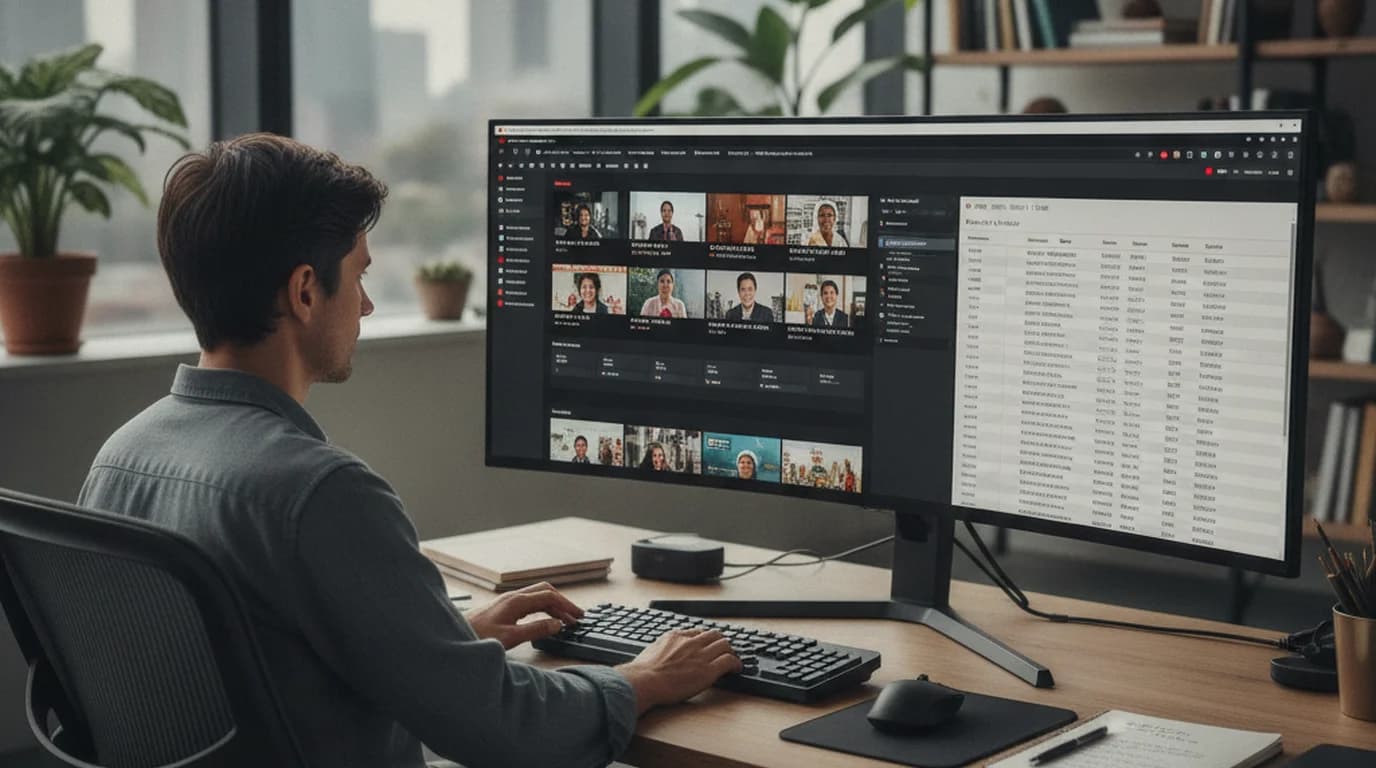
Paste the URL into sipsip.ai's transcriber. I select the language of the video — specifying the language rather than relying on auto-detect gives cleaner output for non-English content. Processing takes 3–5 minutes for a typical 20–30 minute segment.
File the transcript with metadata. In my research folder structure: Language / Topic / Channel_VideoTitle_Date.txt. The video URL goes in a companion spreadsheet with notes on why I included it and what themes I'm tracking from it.
Translate if necessary. For languages I read well (German, French), I work from the original transcript. For Japanese and Korean, I translate to English with DeepL and Papago respectively before analysis.
"I can process a week of relevant YouTube content across six languages faster than I could watch one language's worth of video. The transcript is the research object, not the video."
— Noah Hughes
Related Article
YouTube to Text: How to Get a Text Transcript from Any Video
The Cross-Language Comparison Workflow
My actual research process after I have transcripts:
Step 1: Identify the comparison event. I pick a specific event, report, or topic that appears in coverage across multiple languages within the same time window (usually 2–4 days after the event).
Step 2: Collect transcripts. For each language, I find 3–5 representative YouTube sources (major news channel, alternative outlet, commentary) and process them through sipsip.ai.
Step 3: Translate to English. All non-English transcripts go through DeepL or Papago to produce English versions for comparison.
Step 4: Comparative analysis. I read across the English versions looking for: terminology choices, causal framing, who gets quoted, what context is provided, what's absent.
The transcription and translation steps used to take the majority of my research time. Now they take about 20% — the analysis takes the rest.
Language-Specific Notes
Japanese YouTube: Many Japanese educational and news channels include Japanese closed captions. Sipsip.ai retrieves these when available, which produces cleaner output than fresh audio transcription. For channels without captions, audio transcription is still highly accurate for standard Japanese.
German YouTube: German has extensive closed caption coverage on major news channels (Deutsche Welle, ZDF, ARD). I work from these when available.
Korean YouTube: Papago outperforms DeepL for Korean-English translation, particularly for informal speech in commentary videos and interviews.
Mandarin YouTube: Mainland Chinese content on YouTube is limited; most Mandarin content I analyze comes from Taiwanese and Hong Kong channels, or re-posted mainland content. Specifying "Chinese (Mandarin)" vs. "Cantonese" is essential for accurate transcription.
Related Article
Translate Chinese to English: Tools, Audio Method, and Script Guide (2026)
For Longitudinal Research
I track some topics over months — how coverage of a specific issue evolves across language communities. My archive currently has transcripts from 1,200+ YouTube videos across six languages, covering 18 months of content.
Searching across this archive for specific terminology, named entities, or topic patterns takes seconds. Without transcripts, this corpus would be functionally inaccessible — there's no way to systematically search video.
Noah Hughes is a language and media researcher who studies cross-language coverage of international events. He uses sipsip.ai to build multilingual transcript archives from YouTube content for comparative discourse analysis.
Frequently asked questions

As a language and media researcher, YouTube is my primary source for authentic spoken content across six languages — interviews, news segments, cultural commentary. Getting that content into a format I can actually analyze systematically took me two years to figure out. Here's the workflow.