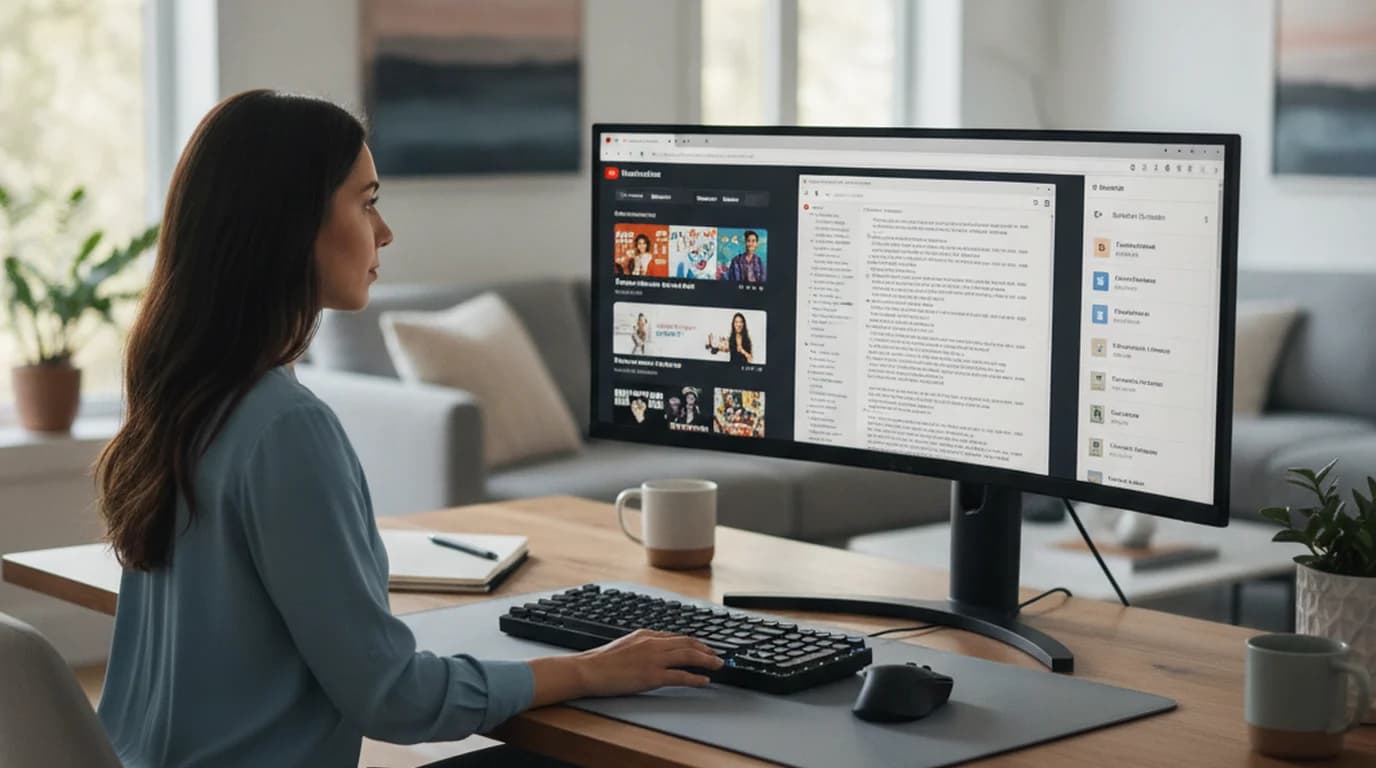
I study the relationship between housing policy and public health outcomes. That research is genuinely interdisciplinary — it requires tracking economics journals, epidemiology publications, urban planning policy briefs, climate science outputs, and political science on regulatory processes. No one can actually read all of that. The question is how to stay informed without losing the thread.
The Interdisciplinary Reading Problem
Disciplinary researchers have it easier than interdisciplinary ones. You subscribe to 10 journals in your field, follow 30 scholars on academic Twitter, and track one professional association's publications. The scope is manageable.
When your work crosses disciplines, you need to track 50-80 publications across six fields. New work comes out daily. You can't read it all, but you also can't ignore it — the insight that changes your framework might appear in an epidemiology journal you haven't prioritized this week.
My reading list was becoming my anxiety.
The Workflow I Built
I now do a 90-minute "sweep" every Monday morning using sipsip.ai's URL summarizer. For any article, report, or long-form piece I've flagged during the previous week, I paste the URL and get a summary.
What I get back:
- Summary — the main argument and conclusion in 150-200 words
- Key points — 4-6 bullet points of the specific findings or claims
- Context — enough to know whether this piece belongs in my core reading pile or my "noted and filed" pile
A sweep of 30 flagged articles takes me about 75-90 minutes. Reading all 30 even cursorily would take 6-8 hours.
"The summary tells me whether this piece changes anything. Usually it doesn't. Sometimes it does. That's exactly what I need to know."
— Noah Hughes
What I Summarize
Policy briefs and working papers. Government agencies, think tanks, and NGOs publish constantly. Most of it is not relevant to my current project. A 40-page housing affordability brief from a city planning department takes 45 seconds to summarize; reading it carefully would take 2 hours. I can decide within 2 minutes whether it belongs in my literature notes.
News analysis and long-form journalism. Academic research often responds to journalism. Keeping track of how policy debates are covered helps me understand the real-world stakes of research questions. Long-form pieces in The Atlantic, ProPublica, or City Lab get summarized so I know their argument before deciding whether to read the full piece.
Preprints and early-stage research. My fields have active preprint cultures. I track several preprint servers. Most preprints I flag are interesting but not immediately relevant — a summary tells me enough to note them without reading 50 pages I'll partially forget.
Conference proceedings. I attend 2-3 conferences a year but submit abstracts and follow 5-6. Reading through all proceedings to find relevant presentations would take days. Summaries let me identify the 8-10 presentations worth tracking before the conference and find the papers worth reading afterward.
Related Workflow
Knowledge Management for Researchers: Turning Literature Into a System
How It Integrates With My Knowledge System
My research system uses Zotero for citation management and Obsidian for literature notes. The URL summarizer sits at the front end of this system as a triage layer.
My workflow:
- Flag articles through the week (RSS reader, newsletter, Twitter/Bluesky)
- Monday sweep: paste URLs into sipsip, get summaries
- For each summary: decide "read fully," "note and file," or "discard"
- "Read fully" pieces get added to Zotero and scheduled
- "Note and file" pieces get a short Obsidian note with the summary and the URL
The key points from summaries often become the initial content of literature notes. When I later read the full piece, I'm annotating and expanding the note rather than creating it from scratch.
The Research Integrity Question
I want to be direct about something: I don't cite from summaries. The summary is a navigational tool — it tells me whether a piece is relevant and what its main claim is. Any actual engagement with the work requires reading the original.
When a piece earns a spot in my literature notes as a cited source, I read it. The summary is how it gets to that stage faster, not a substitute for the stage itself.
Accuracy for Academic Content
The summarizer is most accurate on well-structured web content — policy briefs with executive summaries, structured academic papers, journalism with clear argumentative structure. It's less reliable on:
- Opinion pieces where the claim is embedded in stylistic writing
- Technical documents where the contribution is in data tables or appendices
- Very long documents (200+ pages) where important claims are distributed across sections
For standard academic and policy content, accuracy is high enough that I trust the summary for triage decisions. I've occasionally been wrong — filed something as "not relevant" that I later discovered was important — but that happens with any triage system.
Frequently asked questions

My research touches economics, public health, urban planning, climate policy, sociology, and political science. I can't read everything published. sipsip.ai's web article summarizer lets me stay current across all of it without working 16-hour days.