What shows up on a background check depends entirely on who's running it and what kind of check they've ordered. An employer using a regulated consumer reporting agency gets a different picture than a landlord running an open-web search, and both differ from what an investor or due diligence team sees after a thorough investigation.
At sipsip.ai, we've spent considerable time building AI Investigator — a tool that goes well beyond what traditional background checks surface. That work has clarified exactly where standard reports stop, and where deeper research begins.
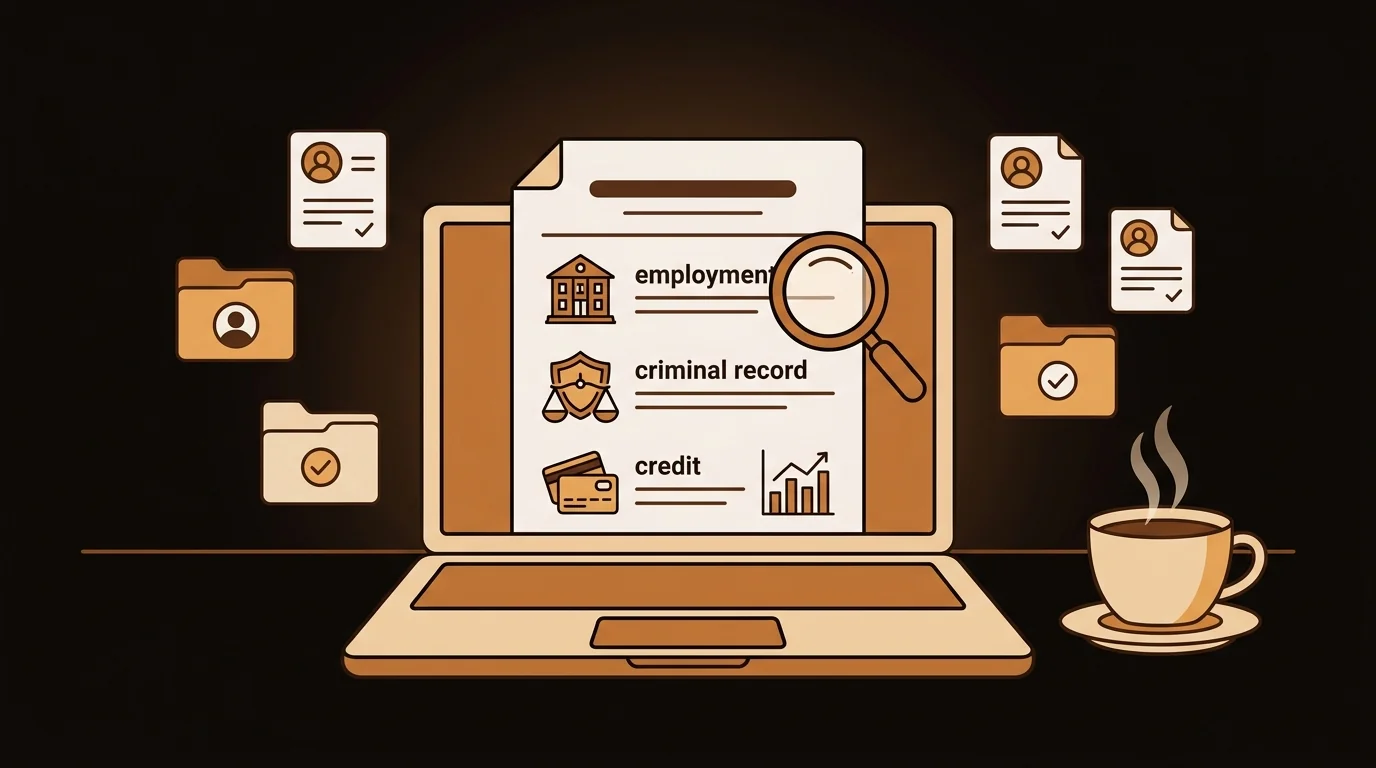
What shows up on a background check: In short, a standard background check includes criminal history, employment verification, education credentials, and sometimes credit history. An AI-powered open-web background report additionally captures news mentions, social signals, public court records beyond standard databases, multimedia appearances, and any publicly indexed content — each tied to a source.
What Is a Background Check?
A background check is a review of someone's history using third-party data sources. The term covers a wide range of processes — from a quick $10 consumer report to a multi-week investigative due diligence process.
The most common type is the employment background check, governed by the Fair Credit Reporting Act (FCRA), which regulates how consumer reporting agencies collect and use data for employment, housing, and credit decisions. But background checks are also used for tenant screening, investor due diligence, vendor vetting, and personal research — each with different tools, legal frameworks, and scope.
Understanding what shows up requires understanding what type of check is being run.
What Shows Up on a Criminal History Check
Criminal background checks are the most common component of employment and tenant screening. Here's what they typically include:
Felonies and misdemeanors. Both types of convictions appear in most criminal record checks. Felonies are serious offenses (murder, fraud, grand theft); misdemeanors are lesser offenses (minor theft, first-offense DUI, disorderly conduct). The distinction matters for some employers and not at all for others.
Sex offender registry status. The national sex offender registry is checked as a standard component of most screening processes.
Pending charges. Active criminal charges — cases that haven't yet been resolved — typically appear in criminal record searches, though how they're handled legally varies by jurisdiction.
Arrests without convictions. This is where it gets nuanced. Arrests alone, without a resulting conviction, appear in some database searches. However, many states restrict or prohibit using arrest records in employment decisions, and the FCRA limits their reporting under certain circumstances. Ban-the-box laws in many jurisdictions add further restrictions.
How far back? Employment criminal background checks are typically limited to 7 years under the FCRA for positions under certain salary thresholds, though this varies by state. There's no consistent national standard, and some serious offenses appear indefinitely.
[UNIQUE INSIGHT] The most significant gap in standard criminal record checks isn't the lookback period — it's geographic coverage. Most services check a limited set of county-level court records or rely on national database aggregations that are notoriously incomplete. Court records remain county-level in most jurisdictions, and digitization is uneven. A criminal record in a jurisdiction the service doesn't check simply won't appear.
Related: How AI Background Checks Work: Source Triangulation and Dossier Synthesis
Employment and Education Verification
Employment verification confirms that an applicant actually worked where they claim to have worked, for the duration they claimed, with the job title they listed. This sounds straightforward but catches material discrepancies more often than people expect.
What's checked: Dates of employment, job title at the time, whether the person is eligible for rehire (some employers will and won't confirm this), and sometimes reason for departure.
What's not checked: Performance, salary, detailed work history, skills, or anything the former employer doesn't choose to volunteer. Most HR departments, on legal advice, will confirm only basic facts.
Education verification confirms that degrees and credentials were actually conferred by the institutions listed. Diploma mills — fake universities that sell degrees — are specifically targeted by some screening services.
The gap here: Employment and education verification is backward-looking and relies entirely on the institutions being checked responding accurately and promptly. It doesn't assess what kind of employee someone actually was, what they built, or how they're regarded in their field. For professional roles, this leaves a significant amount unchecked.
Credit and Financial Background
Credit background checks are typically used for financial roles, positions with fiduciary responsibility, and tenant screening. They pull from the major credit bureaus (Experian, Equifax, TransUnion) and show:
- Payment history and account standing
- Outstanding debts and collections
- Bankruptcies and liens
- Credit utilization patterns
Employment credit checks are modified under the FCRA — they don't include credit scores and exclude some account types. They're intended to assess financial responsibility in relevant roles, not to evaluate creditworthiness for lending.
Not all employers run credit checks, and a number of states restrict or prohibit them for employment purposes outside of specific financial roles.
What Doesn't Show Up on a Standard Background Check
This is what most guides don't cover clearly. Standard background checks have significant gaps:
The open web. News articles, forum posts, LinkedIn activity, social media content, older press coverage, podcast appearances, YouTube videos — none of this is systematically searched by standard background check services. It exists publicly, but it requires a different kind of search.
International records. Unless a service specifically offers international screening (which is expensive and limited), records from other countries typically don't appear.
Non-indexed court records. Not all court filings are digitized or searchable. Older cases, records in jurisdictions with limited digitization, and sealed records don't appear.
Soft signals. Online reputation, public statements over time, inconsistencies between what someone says publicly and what they claim in applications — none of this is captured by a traditional background report.
The New Layer: AI-Powered Background Reports
This is where we built sipsip.ai's AI Investigator. Traditional background check services cover formal databases. An AI-powered open-web investigation covers everything else — the publicly available information that no standard service systematically analyzes.
A background report from an AI investigator includes:
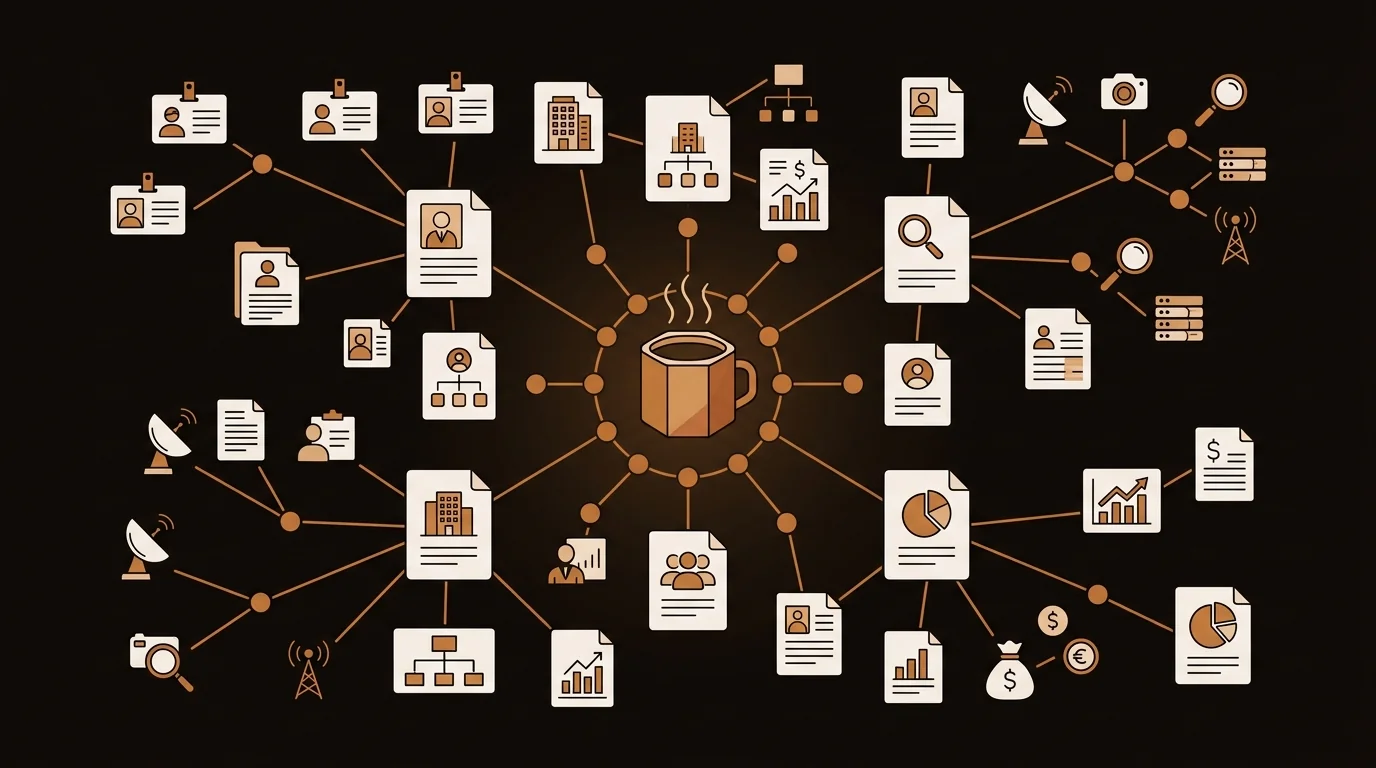
Open-web search across sources. News archives, press releases, public court records beyond standard aggregators, social platforms, professional directories, business registrations, and more — all searched systematically.
Multimedia evidence. YouTube talks, podcast appearances, conference presentations — transcribed and analyzed. This is the layer that catches inconsistencies traditional reports completely miss. Someone who's publicly described their role at a prior company in a podcast gives you primary source evidence that no database contains.
Cross-source triangulation. Claims that appear in one source are cross-checked against others. If a founder says they "led the rebuild of [product]," and there are three public sources that describe a different person doing that work, the AI notes the discrepancy.
Cited dossier output. Not a list of links — a structured report with an executive summary, verified findings, and source citations for each item. Every claim is tied to a specific URL or document.
[PERSONAL EXPERIENCE] In building and testing sipsip.ai's AI Investigator, we found that the highest-signal findings — the discrepancies and discoveries that actually change decisions — almost always come from sources that traditional background checks never touch: an older press interview where someone describes their past differently, a public forum thread, a conference talk from four years ago. The open web holds enormous amounts of signal that formal databases don't capture.
See who uses this workflow in practice: investors use it to vet founders before writing checks, HR teams use it to research candidates before offers, and landlords use it to screen tenants beyond the credit report.
What to Do With What You Find
Different findings require different responses:
Criminal history: For employment and housing decisions, consult your legal obligations. Adverse action based on a regulated background check has specific FCRA requirements (pre-adverse action notice, copy of the report, dispute period). State and local laws add restrictions.
Open-web findings: These are research inputs, not formal consumer reports. They inform judgment but don't require the same legal process. That said, how you use this information in decisions affecting others should still be considered carefully.
Discrepancies: A discrepancy between what someone claims and what the public record shows isn't necessarily disqualifying — it warrants a direct conversation. People make mistakes in dates, misremember titles, and sometimes describe their experience in ways that don't precisely match records.
The goal of a thorough background check isn't to find reasons to decline someone. It's to make a well-informed decision with an accurate picture of who you're dealing with.
For a full comparison of traditional versus AI-powered background check services, see Best Background Check Sites in 2026. To understand how the AI investigation process works technically, see How AI Background Checks Work.
If you want to try an AI-powered background investigation, get early access to sipsip.ai's AI Investigator.
Complete Guide: AI Background Check & People Intelligence: The Complete Decision-Making Guide

With a background spanning advertising and internet, I've launched 8+ apps and built 10+ products across mobile, web, and AI. Now I'm building a system that extracts signal from noise — turning fragmented information into clear, actionable decisions.